Delivering Decades of Recovery Services Via Expert Incident Management in Calgary
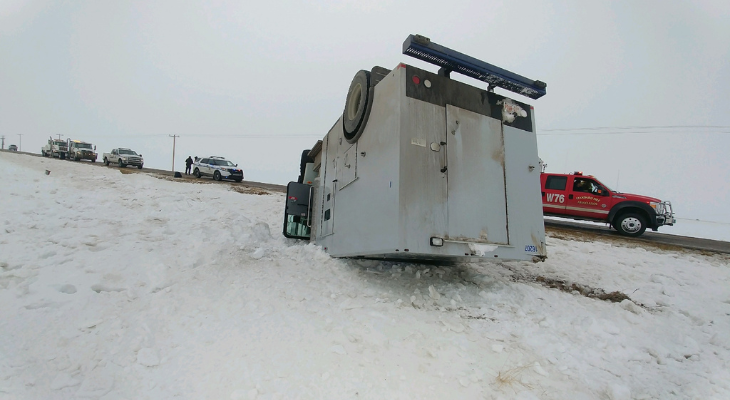
When a multi-vehicle collision closes a major artery like Deerfoot Trail or a jack knifed tractor-trailer blocks Crowchild Trail, the difference between a thirty-minute delay and a three-hour gridlock comes down to one critical discipline, incident management. In a sprawling, high-velocity city like Calgary, traffic incidents are inevitable. But the chaos that follows is not. Effective incident management in Calgary protocols transform dangerous, disorganised crash scenes into controlled, efficient recovery operations. At AAA Towing, we have spent decades refining these protocols to protect motorists, preserve evidence, and restore normal traffic flow with surgical precision.
What Constitutes Professional Incident Management?
Incident management extends far beyond simple vehicle removal. It is a systematic framework involving rapid scene assessment, hazard mitigation, coordinated communication with first responders, and strategic recovery execution. According to the Government of Canada’s Transportation Division, proper incident response reduces secondary collisions by up to fifty percent. Secondary incidents, crashes caused by rubbernecking or improper lane closures, are often more severe than primary collisions. Professional incident management Calgary services act as a shield against this compounding danger.
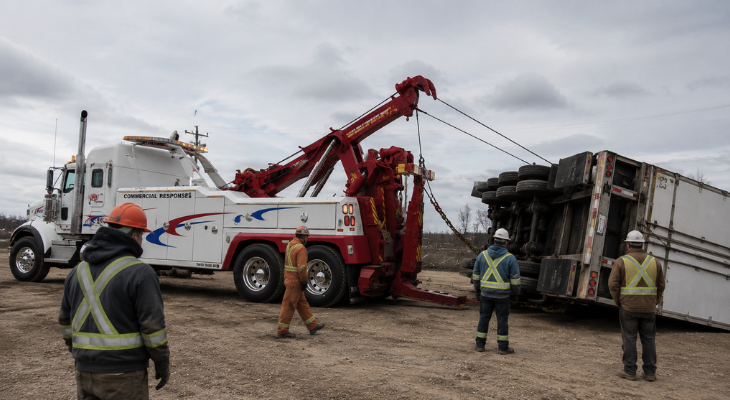
AAA Towing’s approach integrates seamlessly with Calgary Police Service, fire departments, and emergency medical services. We do not simply arrive with a wrecker. We arrive with a recovery plan.
The Three Pillars of Scene Safety
1. Traffic Control and Positive Protection
A disabled vehicle on a high-speed corridor is a magnet for distraction. Our first action is establishing a safety perimeter using truck-mounted attenuators, reflective arrow boards, and Type II barricades. We position heavy-duty wreckers at angles to create a crash cushion. This is not performative. It is a structural defence against inattentive drivers.
2. Hazard Identification and Mitigation
Modern vehicles present complex dangers, ruptured fuel lines, stabilised battery systems in electric vehicles, and pressurised air brake reservoirs. Our incident commanders carry gas detection monitors and thermal imaging cameras to identify hot spots or fuel vapour risks before rigging begins. For commercial loads, we verify hazardous materials placards and consult the Emergency Response Guidebook before moving a single cable.
3. Efficient Clearance Windows
Every minute a lane remains closed increases queue length exponentially. Using rotator wreckers and self-loading dollies, we execute full recoveries of overturned vehicles or under-ride collisions in under ninety minutes on most urban corridors. This rapid clearance directly reduces congestion and lowers the probability of secondary incidents.
Decades of Specialised Recovery Knowledge
Experience cannot be simulated. AAA Towing’s leadership has directed incident response across four decades of Alberta’s evolving highway landscape. We have extracted school buses from winter ditches, righted overturned fuel tankers, and disentangled commercial vehicle under-rides at Sarcee Trail interchanges. This historical knowledge informs every decision:
- Seasonal Awareness: Winter recovery requires different rigging for frozen ground anchors. Summer demands fire watch protocols.
- Vehicle Evolution: We adapt techniques for electric vehicle battery isolation and advanced driver-assistance system recalibration post-tow.
- Legal Compliance: Our incident reports serve as court-admissible documents for insurance and police investigations.
Integrating with Calgary’s Traffic Management Ecosystem
Professional incident management Calgary does not operate in isolation. AAA Towing maintains direct radio and data links with the City of Calgary’s Traffic Management Centre. When an incident occurs, we receive real-time camera views of the scene before our trucks arrive. This allows us to deploy the precise equipment for the situation: a flatbed for a compact car spin-out or a heavy rotator for a rolled dump truck.
Furthermore, we follow the National Safety Code’s standards for securement and load integrity during post-incident towing. Every chain, binder, and strap is rated and inspected monthly. Improper securement turns a recovery vehicle into a second hazard.
Protecting Your Rights and Records
For fleet operators involved in an incident, the tow itself can become a legal flashpoint. An unqualified tower may damage a vehicle, compromise electronic logging device data, or improperly handle cargo. Choosing a provider with certified incident management Calgary expertise protects your safety rating and your liability position.
AAA Towing provides detailed post-recovery documentation, including:
- Scene photographs with timestamps.
- Equipment inspection logs for all rigging used.
- Chain-of-custody records for any personal property recovered.
These documents are invaluable during insurance subrogation or regulatory review.
Why AAA Towing Is Calgary’s Incident Management Leader
We are not a dispatch service. We are a fully equipped fleet of rotators, landfills, and specialty carriers stationed strategically across Calgary. Our average response time to primary corridors is eighteen minutes. We operate twenty-four hours daily, three hundred sixty-five days yearly, including Christmas Day and during polar vortex events.
Our technicians are professionals in vehicle recovery, advanced rigging, and hazardous materials awareness.
Conclusion
An incident on Calgary’s roads is never convenient, but it does not need to become a catastrophe. Professional incident management Calgary restores order, protects lives, and reopens lanes with ruthless efficiency. AAA Towing brings decades of that expertise to every collision, breakdown, or rollover we face. We coordinate with the police. We mitigate hazards. We clear the scene fast. When the unpredictable happens on Calgary’s roads, trust the team that has been managing incidents since before Deerfoot Trail was completed. Contact us for immediate, expert incident response anywhere in the Calgary region.