Tackling Light to Heavy Duty Jobs With Professional City Wide Towing
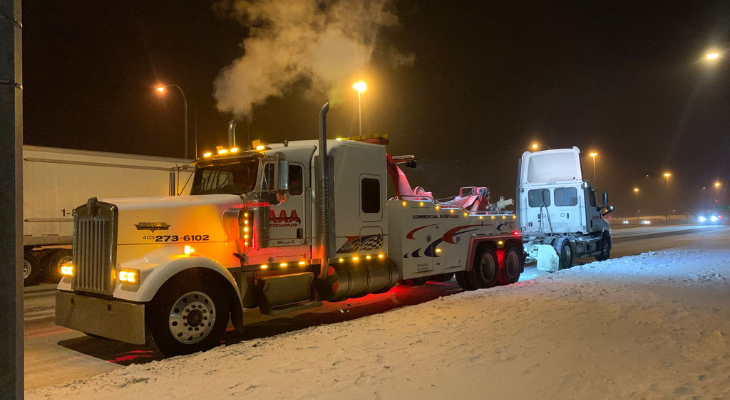
Not every roadside situation is the same. A compact sedan stuck in a residential parking ramp requires a different approach than a fully loaded delivery truck disabled on Deerfoot Trail. Likewise, a semi-trailer that has slid into a ditch during a winter storm cannot be recovered using the same equipment designed for a crossover utility vehicle.
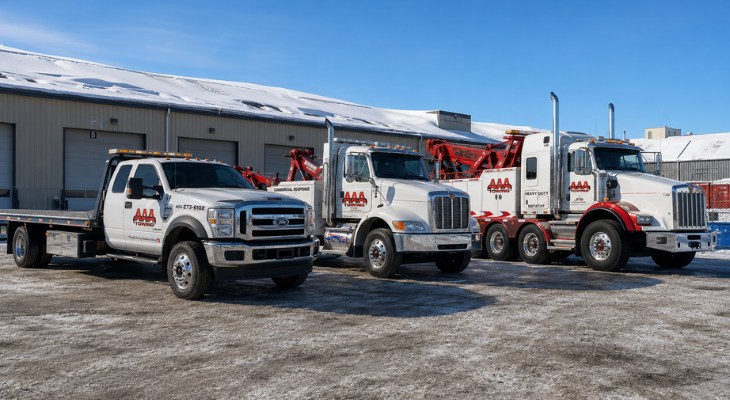
This is why professional operators offering true city wide towing must maintain a diverse fleet and the technical expertise to match each job with the right tools. Attempting to move a heavy vehicle using undersized equipment risks further damage, injury, and dangerous conditions for other motorists. Understanding the distinction between light, medium, and heavy duty towing helps Calgary drivers and fleet managers make informed decisions during stressful situations.
Light Duty Towing: The Everyday Essential
Light duty towing refers to the recovery and transport of standard passenger vehicles. This category includes sedans, hatchbacks, coupes, small crossovers, minivans, and light pickup trucks. These vehicles typically weigh less than 4,500 kilograms and do not require specialised lifting systems beyond standard flatbed or wheel-lift equipment.
Most Calgary drivers will experience a need for light duty towing at some point. Common scenarios include:
- A dead battery leaving a vehicle stranded in a shopping centre parking lot
- A flat tyre on a residential street with no spare available
- An empty fuel tank after misjudging the distance to the nearest station
- A minor collision rendering the vehicle unsafe to drive
- A mechanical failure such as a broken alternator or starter motor
Professional light duty towing focuses on rapid response and damage prevention. Flatbed trucks are preferred for modern vehicles with low ground clearance or all-wheel drive systems, as towing with wheels on the ground can damage the transmission. When you require city wide towing for a passenger vehicle, the responding operator should arrive with a flatbed capable of securing the car without contact between its tyres and the road surface.
Medium Duty Towing: Bridging the Gap
Medium duty towing serves commercial vehicles, larger trucks, and heavy vans that exceed the capacity of standard light duty equipment but do not require massive machinery. This category includes box trucks, shuttle buses, delivery vans, cube vans, and some Class 3 through Class 6 trucks with gross vehicle weight ratings between 4,500 and 11,800 kilograms.
Medium duty towing demands more powerful winches, heavier duty wheel lifts, and reinforced flatbeds. Operators must understand air brake systems, dual rear wheel configurations, and weight distribution characteristics of commercial chassis.
Calgary businesses rely on medium duty towing for several critical purposes:
- Recovering a delivery truck with a failed transmission during a morning route
- Moving a broken-down shuttle bus blocking a transit lane
- Extracting a landscaping truck stuck in a muddy construction site
- Transporting a recreational vehicle with engine trouble back to a repair facility
Professional operators performing medium duty recoveries must also manage cargo considerations. To ensure safety for everyone on the road, it is important to follow the Alberta Traffic Safety Act guidelines regarding commercial vehicle weights and securement.
Heavy Duty Towing: Industrial Strength Recovery
Heavy duty towing represents the most demanding category of vehicle recovery. This service addresses semi-trailers, tractor-trailer combinations, dump trucks, concrete mixers, garbage trucks, buses, and specialised industrial equipment. These vehicles can weigh anywhere from 11,800 kilograms to more than 36,000 kilograms when fully loaded.
Recovering a heavy vehicle requires purpose-built equipment, including rotator wreckers with multiple winch lines, underlift systems rated for extreme weights, and outriggers that stabilise the truck during lifting operations. Heavy duty tow operators must understand air brake release procedures, driveshaft disconnection protocols, and safe handling of hazardous materials.
Heavy duty towing situations are rarely simple. A jackknifed semi-trailer on a highway off-ramp may require pulling the tractor and trailer in two separate directions. A bus that has gone off the road may need to be stabilised to prevent rolling before winching begins.
When a fleet manager requests city wide towing for a heavy vehicle, the service provider must arrive with multiple operators. Heavy duty recoveries are team operations that prioritise safety over speed.
Why Fleet Size and Dispatch Matter for City Wide Coverage
Calgary stretches across a significant geographic area. From the automotive businesses along Barlow Trail to the distribution centres near the airport. From the residential garages of McKenzie Towne to the industrial yards in the Foothills Industrial Park. A towing provider offering genuine city wide coverage must maintain a dispersed fleet and an intelligent dispatch system.
Key factors that distinguish professional city wide towing providers include:
- Geographic distribution of trucks: Professional operators station light duty flatbeds in multiple quadrants of Calgary to reduce response times across all communities.
- Strategic equipment placement: Medium duty trucks are positioned near major commercial corridors including Macleod Trail, 16th Avenue, and Sarcee Trail. Heavy duty rotators are kept at central depots with direct access to highways such as Stoney Trail and Deerfoot Trail.
- Job categorisation in dispatch: Sending a heavy duty rotator to retrieve a stalled sedan wastes fuel and ties up equipment. Sending a light duty flatbed to recover a semi-trailer wastes time when the operator arrives unable to perform the job.
- Real-time routing technology: Professional dispatch teams use GPS tracking and traffic monitoring to direct the nearest appropriate truck to each location.
- 24/7 availability across all zones: True city wide coverage means having operators on standby during overnight hours, weekends, and statutory holidays for every quadrant of the city.
The Importance of Proper Equipment for Vehicle Safety
Using the correct towing equipment protects the vehicle being recovered. A car towed with its drive wheels on the ground can suffer differential and transmission damage. A heavy truck lifted by an underrated wheel lift can sustain frame damage.
Professional towing operators train extensively on securement techniques. They use soft straps rather than metal chains when securing vehicles with painted surfaces. They understand where to position lifting points on unibody cars versus body-on-frame trucks. Furthermore, professional operators carry liability insurance that covers damage to the vehicles they transport.
Conclusion
From a compact car that will not start in a suburban driveway to a loaded semi-trailer stranded on a snowy highway shoulder, the range of towing requirements in Calgary demands professional operators like us at AAA Towing. We maintain a diverse fleet and undergo specialised training because we know that light, medium, and heavy duty towing each require distinct equipment, techniques, and safety protocols to ensure the job is done right.
When you require city wide towing, I believe that selecting a provider with a proven track record across all weight classes is the only way to ensure the right truck arrives with the right operator. We recognise that every situation we encounter is unique, and we are committed to responding with the precision your vehicle deserves. Contact us at AAA Towing today for reliable, 24/7 assistance across Calgary