Mud, Gravel, or Hillside – How Tow Operators Recover Vehicles In Tough Terrain
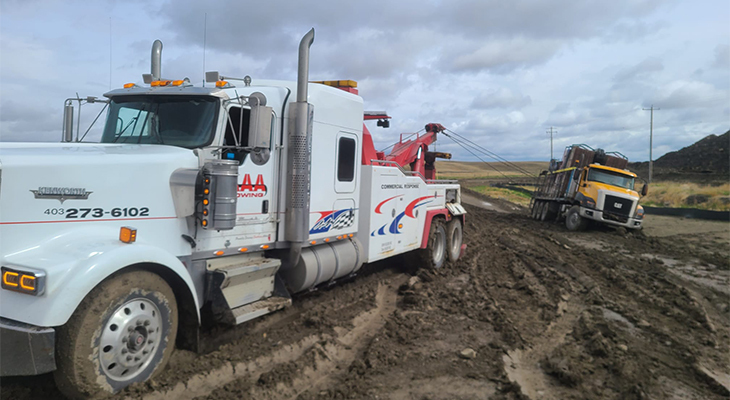
When your vehicle slides into a muddy ditch, gets stuck in loose gravel, or slips off a steep hillside, the situation can feel overwhelming. But for professional recovery services, these challenges are part of everyday operations.
In Alberta’s unpredictable terrain — from slippery rural roads to steep mountain passes — vehicle recovery requires far more than strength alone. It takes precision, experience, and specialized equipment to bring vehicles back to safety under tough conditions.
Understanding The Challenge: Alberta’s Tough Terrain
Alberta’s landscape is as diverse as its weather. A towing team might deal with muddy shoulders near Calgary one day and steep gravel trails leading to Banff the next. Each surface brings its own risks:
- Mud causes vehicles to sink, reducing traction and creating suction beneath the tires.
- Gravel shifts easily under weight, making it difficult to gain a solid pull.
- Hillsides demand careful rigging to prevent sliding or rollover during recovery.
According to the Workers’ Safety and Compensation Commission, nearly 30% of car accidents in Canada occur on snowy or icy roads. These challenging conditions reduce visibility, and driver control, often leaving vehicles off-road. That’s why skilled recovery services are essential for safely retrieving vehicles and preventing further damage or accidents.
Mud Recovery — Battling Suction And Slippery Slopes
Assessing The Scene
When a vehicle is trapped in mud, the first step is always assessment. Tow operators check ground firmness, slope angles, and entry points for the wrecker. A wrong move could bury the recovery truck itself.
Choosing The Right Equipment
For muddy conditions, winches, snatch blocks, and ground anchors are essential. Operators often use low-pressure tires on recovery trucks to improve traction. In deep mud, air-cushion recovery systems or rotators may be deployed to lift the vehicle vertically before winching it forward.
Technique And Safety
Each pull is calculated. The winch cable angle, line tension, and anchor strength are adjusted to prevent snapping or vehicle roll. Operators wear high-visibility gear and maintain communication using radios — especially when working near active traffic.
It’s slow, careful work. But when done right, even a 20-ton semi-truck stuck to its axles can be freed without damage.
Gravel Recoveries — Stability Is Everything
Loose gravel presents a different kind of challenge. A vehicle might appear stable but can shift suddenly, sending tons of weight sliding toward the recovery crew.
Anchoring For Control
Heavy-duty tow trucks rely on stabilizer legs and winch anchors to maintain position. Operators will often use two winch lines — one for pulling and one for balancing. This prevents sudden roll or tilt if the gravel gives way.
Tire And Traction Adjustments
Operators sometimes deflate tires slightly for better grip on shifting surfaces. In steep gravel terrain, tow trucks with four-wheel drive and differential locks are essential for controlled power delivery.
Hillside Recoveries — The True Test Of Precision
Hillside or embankment recoveries are some of the most dangerous tasks a tow operator can face. One wrong calculation and gravity takes over.
Risk Assessment And Setup
Operators start by evaluating slope grade, soil stability, and available anchor points. Sometimes, the safest move is to approach from above the stranded vehicle using a rotator or crane-equipped wrecker.
Rigging And Coordination
Multiple recovery lines are attached from different angles to prevent rolling or sliding. The crew coordinates every pull using spotters and communication headsets. Tow operators may also use winch dampers — weighted blankets that reduce cable whip in case of breakage.
Precision Over Power
While it may seem like a test of strength, successful hillside recovery depends on math, not muscle. Operators calculate weight distribution, winch angles, and ground resistance before executing any pull. This precision keeps the vehicle — and everyone around — safe.
The Tools That Make The Impossible Possible
Modern heavy-duty towing is powered by technology. Gone are the days when chains and brute force were enough.
- Rotator Tow Trucks: Capable of lifting up to 75 tons, ideal for overturned semis and off-road rescues.
- Air Cushion Recovery Systems: Allow vehicles to be raised gently without additional damage.
- Hydraulic Winches and Booms: Provide controlled pulling power for uneven terrain.
- GPS Dispatch Systems: Ensure the nearest specialized unit reaches the scene quickly.
Every piece of equipment is inspected regularly and operated by certified professionals — ensuring safety and efficiency even in the toughest conditions.
Why Experience Matters in Tough Terrain
When vehicles are stranded off-road, amateurs or under-equipped operators can make things worse — causing rollovers, cable snaps, or frame damage.
Professional tow operators combine technical expertise with on-ground adaptability. They understand soil types, traction patterns, and recovery angles. Their priority isn’t just towing — it’s preventing further accidents.
Building Trust Through Safety And Speed
Towing in tough terrain isn’t only about muscle and machines — it’s about trust. Drivers and fleet owners rely on operators to respond quickly, communicate clearly, and deliver safe results every time.
That’s why established towing providers invest in:
- 24/7 emergency dispatch teams
- Certified heavy-duty recovery operators
- State-of-the-art equipment
- Comprehensive insurance coverage
These practices ensure every job, no matter how difficult, ends safely and efficiently.
About AAA Towing
AAA Towing is a trusted Calgary-based towing and recovery company known for reliable heavy-duty towing and roadside assistance. Whether it’s a semi-truck stuck in the mud, a bus stranded on gravel, or a trailer off a hillside, their certified operators handle it all.
With a fleet of modern wreckers and rotators, AAA Towing delivers 24/7 emergency response across Calgary and surrounding areas. Every recovery is executed with precision, safety, and professionalism.
If you’re stuck in tough terrain and need immediate help, contact AAA Towing today — your trusted partner for reliable heavy-duty recovery in Alberta.