5 Battery Issues That Should Never Be Ignored in Winter
Winter driving in Calgary places a unique strain on vehicles. Cold temperatures reduce battery efficiency while electrical demand increases. Heaters, defrosters, lights, and safety systems all rely on consistent power. When battery performance drops, vehicles can become unreliable without warning.
Ignoring early battery issues during winter often leads to roadside breakdowns. These situations create safety risks and may escalate into towing scenarios. Understanding warning signs helps drivers act before conditions worsen.
Knowing when professional support is needed can prevent exposure, delays, and vehicle damage. Reliable towing services in Calgary play a critical role when battery failures occur in winter conditions.
Why Winter Battery Problems Escalate Faster
Cold temperatures slow chemical reactions inside vehicle batteries. This reduces available starting power. At the same time, winter driving increases electrical demand. Vehicles require more energy to operate essential systems safely.
The Government of Canada highlights cold-weather vehicle risks clearly. Cold temperatures reduce the capacity of a vehicle’s battery and increase the energy required to start the engine.
This combination explains why battery issues that seem minor in warmer months become serious problems in winter. Delayed response often results in full battery failure.
1. Slow Engine Crank During Cold Starts
A slow engine crank is one of the earliest battery warning signs. The engine may turn over sluggishly before starting. In some cases, it may fail to start entirely.
Cold weather thickens engine oil and increases resistance. Weak batteries struggle to provide sufficient power during these conditions. Repeated slow starts signal declining battery capacity.
Ignoring this sign often leads to total battery failure. Vehicles may stall in unsafe locations. Professional battery boosting or towing may become necessary.
2. Electrical Warning Lights Appearing on the Dashboard
Battery-related warning lights often appear before complete failure. These indicators signal voltage inconsistencies or charging system strain.
Modern vehicles rely on electronic control units. These systems require a stable voltage to operate correctly. Cold weather amplifies electrical fluctuations when batteries weaken.
Transport Canada explains vehicle electrical reliability concerns. Electrical systems are affected by cold temperatures, which can reduce battery performance and reliability.
Ignoring warning lights can lead to sudden vehicle shutdowns. This increases the likelihood of roadside exposure and towing requirements.
3. Interior Lights and Accessories Losing Power
Dimming interior lights indicate declining electrical output. Power windows, infotainment systems, and seat heaters may operate inconsistently.
Winter conditions increase resistance within electrical components. A healthy battery compensates for this demand. A weakened battery cannot maintain a consistent voltage.
This issue often worsens quickly in cold weather. Drivers may experience progressive power loss while driving or during restarts. These situations can escalate into vehicle immobilization.
4. Battery That Requires Frequent Boosting
Needing frequent boosts is a clear warning sign. While boosting restores temporary power, it does not resolve underlying battery degradation.
Repeated boosting stresses both the battery and the electrical system. Cold temperatures reduce recovery time between boosts. Each failure increases the likelihood of a complete breakdown.
Drivers often rely on professional roadside recovery services in Calgary when repeated battery failures occur. However, repeated boosting without addressing battery health usually leads to towing situations.
5. Corrosion or Visible Battery Damage
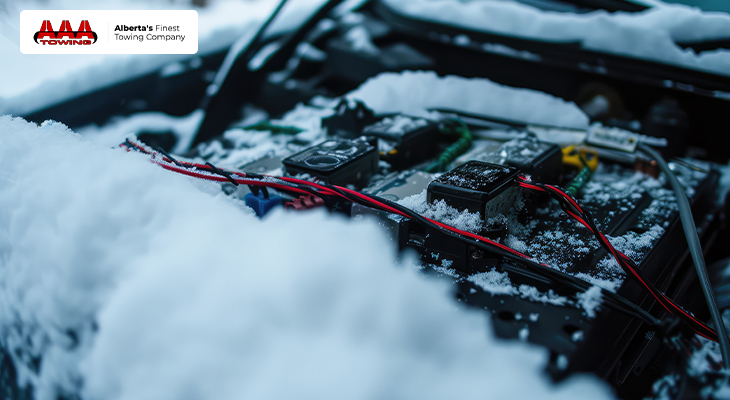
Battery terminals exposed to moisture and road salt corrode faster in winter. Corrosion increases electrical resistance and reduces current flow.
Visible swelling or cracks in the battery casing indicate internal damage. Freezing temperatures can worsen existing structural weaknesses.
The Government of Canada outlines vehicle maintenance safety clearly. Corrosion on battery terminals can interfere with electrical flow and vehicle reliability.
Corroded or damaged batteries pose safety risks. Professional handling is required to prevent further damage or electrical hazards.
When Battery Issues Turn Into Towing Situations
Not all battery problems can be resolved roadside. In extremely cold conditions, boosting may fail. Frozen batteries or damaged electrical systems require vehicle transport.
Location also matters. Breakdowns on highways, busy intersections, or remote roads increase safety risks. Towing becomes the safest option to protect drivers and vehicles.
Ignoring early signs often results in more complex recovery scenarios. Prompt action reduces downtime and exposure during winter conditions.
Why Professional Battery Boosting Matters in Winter
Modern vehicles contain sensitive electronics. Improper boosting can cause voltage spikes and system damage.
Professional operators use controlled equipment designed for modern electrical systems. They assess whether boosting is safe or if towing is required.
This approach protects vehicle systems and prevents further failures. It also ensures driver safety during harsh winter conditions.
How Ignoring Battery Problems Impacts Winter Safety
Winter roadside exposure carries serious risks. Prolonged cold exposure affects driver safety and visibility. Traffic hazards increase during stalled vehicle situations.
Delays also affect response times. Battery failures during cold snaps often create high demand for assistance. Early intervention prevents unnecessary escalation.
Prepared drivers recognize warning signs early. This allows safer decisions before conditions worsen.
Preparing for Winter Battery Reliability
Step 1: Schedule Routine Battery Checks Before Winter
Routine battery checks before winter significantly reduce breakdown risk. Cold temperatures expose hidden weaknesses that may not appear during warmer months.
Step 2: Pay Attention to Early Warning Signs
Monitoring early warning signs helps prevent unexpected failures. Slow starts, dim lights, or warning indicators should never be ignored once temperatures drop.
Step 3: Do Not Dismiss Minor Symptoms
Drivers should avoid brushing off small battery issues. Winter conditions amplify minor problems rapidly, often turning them into complete failures.
Step 4: Understand How Winter Increases Risk
Cold weather increases electrical demand while reducing battery output. This combination makes delayed action far more dangerous during winter driving.
Step 5: Know When Professional Assistance Is Needed
Knowing when professional assistance is required ensures safer outcomes. Early intervention reduces roadside exposure and prevents escalation into recovery situations.
About Us
AAA Towing provides professional towing and recovery services across Calgary and the surrounding areas. Our team focuses on safety, efficiency, and vehicle protection during winter conditions.
For dependable response and professional support, contact us to arrange service when it matters most.