Where to Wait for a Tow Truck in Calgary
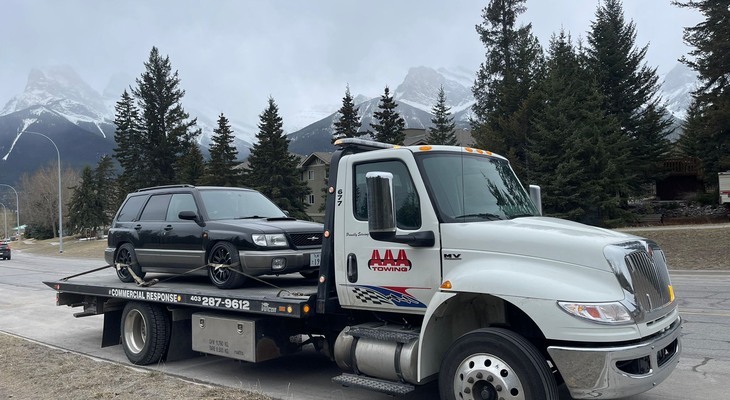
Your car has stopped working, and you have called for help. Now comes an important decision: where should you wait for the tow truck? The safest location depends on traffic, road conditions, weather, and whether your vehicle presents an immediate hazard. At AAA Towing, we provide towing services in Calgary and surrounding areas, helping motorists deal with unexpected breakdowns. Knowing where to wait for a tow truck in Calgary can help you avoid unnecessary risks while professional assistance is on the way.
Where Should You Wait for a Tow Truck in Calgary?
The safest place to wait is generally somewhere protected from moving traffic and away from immediate hazards. However, leaving your vehicle is not always the safest decision.
On a busy highway, staying inside a properly positioned vehicle with your seatbelt fastened may be safer than stepping onto a narrow shoulder. In a parking lot, you may have more freedom to move to a nearby protected area.
Before deciding where to wait, consider:
- How close your vehicle is to moving traffic.
- Whether your vehicle is blocking a lane.
- Whether there is smoke, fire, or a fuel leak.
- The width and condition of the shoulder.
- Weather, lighting, and visibility.
- Whether children or passengers need assistance.
- The availability of a safe location away from the roadway.
Your personal safety should always take priority over protecting the vehicle or inspecting the mechanical problem.
When Staying Inside Your Vehicle Is Safer
Remaining inside may be the better choice when your vehicle is safely positioned away from active traffic but exiting would expose you to passing vehicles.
Keep your seatbelt fastened, leave your hazard lights operating if possible, and avoid opening doors toward the roadway.
Do not get out simply to inspect a damaged tyre or look beneath the hood.
If the vehicle is on fire, leaking fuel, or presents another immediate danger, leave it when safe and move well away from traffic.
When You Should Move Away From the Vehicle
If your vehicle is in a dangerous position and there is a safe route to a protected location, moving away may reduce your exposure to a secondary collision.
Choose an area well away from traffic, such as a protected pedestrian space or a location beyond a roadside barrier where access is safe.
Never cross active traffic lanes to reach a waiting area.
If you cannot safely exit or the vehicle is blocking traffic, contact emergency services when the situation presents an immediate danger.
Where to Wait for a Tow Truck on Calgary Highways
Highway breakdowns require particular care because vehicles may be travelling at high speeds.
Deerfoot Trail, Stoney Trail, and other major Calgary routes can have heavy traffic, narrow stopping areas, and limited access points.
Waiting on Deerfoot Trail or Stoney Trail
If your vehicle begins failing while driving, signal and move toward a suitable shoulder or emergency stopping area only when it is safe.
Avoid sudden lane changes or crossing multiple lanes to reach an exit.
Once stopped, activate your hazard lights and assess the surrounding traffic before deciding whether to leave the vehicle.
If you cannot reach a safe stopping location, tell emergency services or your towing dispatcher exactly where the vehicle is positioned.
Our team recommends providing the highway name, travel direction, and nearest interchange so the operator can locate you more accurately.
Should You Wait Behind a Highway Barrier?
A roadside barrier may provide separation from traffic, but reaching it is not always safe.
You should never climb over a barrier without knowing what is on the other side. There may be a steep embankment, drainage ditch, or another hazard.
If a safe pedestrian route leads to a protected area away from traffic, that location may be preferable to standing on an exposed shoulder.
Do not stand immediately behind your vehicle or between it and passing traffic.
Where to Wait After a Breakdown on a Residential Street
Residential roads generally have slower traffic than highways, but breakdowns can still create hazards.
Parked vehicles, intersections, cyclists, and limited visibility can affect where you should wait.
Choose a Sidewalk or Another Protected Area
If your vehicle has stopped safely along a residential street, a nearby sidewalk may provide a suitable waiting location.
Stay clear of driveways, intersections, and vehicle access points.
If children are travelling with you, keep them together and away from the roadway.
When waiting outside, remain where you can communicate with the arriving operator without standing beside traffic.
Avoid Waiting at Blind Corners and Intersections
Vehicles stopped near curves, hills, or intersections can be difficult for other drivers to see.
If your vehicle can still move safely, consider reaching a suitable parking area before it becomes completely disabled.
If it cannot move, avoid standing beside it where approaching drivers have limited visibility.
Tell the dispatcher about the location and any concerns that may affect towing access.
Where to Wait for a Tow Truck in a Parking Lot
Parking lots are often more suitable for waiting because they usually have lower vehicle speeds and more space.
However, active loading areas, busy entrances, and underground parking facilities can create additional risks.
Waiting at Shopping Centres or Commercial Properties
If your car breaks down at a shopping centre, move to a safe pedestrian area when possible.
Avoid standing in active driving lanes or near loading docks.
If weather conditions are poor, a nearby public indoor waiting area may be suitable, provided you can access it safely and remain available to the towing operator.
Keep your phone close and tell dispatch if you move away from the vehicle.
Waiting in an Underground Parkade
Underground parking facilities may have narrow driving lanes, restricted visibility, and limited tow truck clearance.
If your vehicle is safely parked, choose a designated pedestrian area away from moving vehicles.
Do not stand on entrance ramps or around tight corners.
When requesting a tow truck in Calgary, provide the parking level, entrance location, and any height restrictions.
These details help the towing company determine whether appropriate equipment can access the disabled vehicle.
Where to Wait During Calgary’s Winter Weather
Winter can make roadside waiting more difficult. Snow, ice, freezing temperatures, and reduced visibility may affect both your immediate safety and the towing process.
A location that is manageable in summer may become dangerous during a snowstorm.
Waiting During Extreme Cold
If your vehicle is safely parked and can provide shelter, remaining inside may help protect you from cold temperatures.
Keep warm clothing, gloves, and blankets available during winter travel.
If the engine can operate safely, ensure the exhaust outlet is clear of snow and that exhaust gases cannot enter the cabin. Never run the engine in an enclosed space.
If the vehicle cannot provide safe shelter or heat, seek a protected indoor location when it is safely accessible.
Contact emergency services if cold exposure becomes a serious threat to you or your passengers.
Waiting When Your Vehicle Is Stuck in Snow
If your vehicle becomes stuck in a snowbank or ditch, avoid repeatedly spinning the wheels.
This can make the vehicle harder to recover and may damage mechanical components.
Do not stand downhill from an unstable vehicle or near a roadway where passing traffic could slide.
If the vehicle has entered a ditch, assess whether staying inside creates a greater risk. Move to a safe location if you can do so without exposing yourself to traffic or unstable ground.
Our professionals at AAA Towing can assess the reported conditions and arrange appropriate vehicle recovery equipment.
Understand Alberta’s Roadside Safety Rules
Roadside safety also depends on approaching drivers.
The Government of Alberta provides roadside worker safety guidance explaining how motorists should respond when approaching stopped roadside vehicles with activated flashing lights.
Drivers in the lane closest to a stopped roadside vehicle must move into a farther lane when safe. If they cannot safely move over, they must slow to 60 km/h or the posted speed limit, whichever is lower.
These rules help protect towing operators, emergency responders, and other roadside workers.
However, drivers waiting for assistance should never assume approaching traffic will slow down or change lanes.
Keep a safe distance from the roadway and avoid entering the towing operator’s work area.
Where to Wait After an Accident
An accident may leave your vehicle in an unsafe position or create hazards that are not immediately visible.
Damaged electrical components, leaking fuel, broken glass, and unstable vehicle parts can increase the risks.
Follow Emergency Responder Instructions
If anyone is injured, a fire has started, or the accident creates an immediate danger, call 911.
If police or emergency responders are present, follow their directions about where to wait.
Do not move into traffic to inspect the damage or retrieve belongings.
If your vehicle can be moved safely and authorities permit it, follow the applicable instructions for clearing the roadway.
Avoid Remaining Near Damaged Vehicles
After a collision, keep a suitable distance from vehicles showing signs of smoke, leaking fuel, or structural instability.
Do not stand between damaged vehicles or attempt to disconnect mechanical components.
If towing is required, the operator can assess the vehicle and determine the appropriate loading method.
Where Passengers Should Wait During a Roadside Emergency
Passengers may have different safety needs, particularly when children, older adults, or people with limited mobility are involved.
The safest waiting arrangement should account for everyone’s ability to move and access shelter.
Keep Children and Pets Away From Traffic
If remaining inside is safest, ensure children are properly restrained.
If you leave the vehicle, keep children together and under close supervision.
Pets should remain secured in suitable carriers or on leashes when outside.
Never allow children or animals to walk around the towing equipment or approach moving traffic.
Consider Passengers Who Need Assistance
If someone has limited mobility, tell the dispatcher before the tow truck arrives.
Explain whether the passenger can exit independently and whether there is a safe pedestrian route available.
If a person requires urgent medical care, request emergency medical assistance rather than relying on towing personnel.
How to Help Your Tow Truck Operator Find You
Even after you select a safe waiting location, the operator needs accurate information to reach your vehicle.
At AAA Towing, we encourage drivers to describe their exact location, vehicle condition, and any obstacles that could affect access.
Share Useful Location Details
When requesting assistance, provide:
- The nearest intersection or highway exit.
- Your direction of travel.
- Your vehicle’s make, model, and colour.
- The approximate location of the vehicle.
- Any nearby landmarks.
- Whether the vehicle is in a ditch, parking lot, or traffic lane.
- Any entry restrictions or parking clearance limits.
If your location is difficult to describe, a GPS location pin may help.
Do not walk along a busy road simply to locate a street sign.
Tell Dispatch Where You Are Waiting
If you have moved to a nearby protected area, tell dispatch where you can be found.
For example, you might be waiting inside an accessible shopping centre or in a designated pedestrian area.
Keep your phone available for calls and updates.
Do not return to the roadside unnecessarily when the tow truck arrives.
What to Do When the Tow Truck Arrives
The arrival of a tow truck does not mean the roadside hazard has ended.
Loading and recovery operations require space, and certain equipment can move under significant force.
Stay Clear of the Loading Area
Follow the operator’s instructions and avoid standing near:
- Winch cables under tension.
- Wheel-lift equipment.
- Moving flatbed platforms.
- The space between the tow truck and disabled vehicle.
- Traffic lanes surrounding the recovery location.
Do not attempt to attach towing equipment or direct the loading process unless you are trained and authorized to do so.
Retrieve Belongings Only When Safe
If you need to collect personal items, ask the operator when it is safe to approach the vehicle.
Keep essential belongings, vehicle keys, and the towing destination available when possible.
Never enter a damaged or unstable vehicle just to retrieve something that can be collected later.
If the vehicle is being transported to a repair facility, confirm the destination before leaving the scene.
Prepare for Future Breakdowns in Calgary
Knowing where to wait becomes easier when you have a basic roadside plan.
Before travelling, especially outside the city, keep an emergency kit in your vehicle.
Useful supplies include:
- A charged phone and power bank.
- Warm clothing and blankets.
- A flashlight.
- Reflective safety equipment.
- Water and non-perishable snacks.
- A basic first aid kit.
- Emergency contact information.
Check weather and road conditions before longer drives toward Airdrie, Cochrane, Chestermere, Okotoks, or High River.
Regular vehicle maintenance can also reduce the chance of being stranded in a dangerous location.
Pay attention to dashboard warnings, tyre condition, battery performance, and unusual mechanical sounds.
Conclusion
Knowing where to wait for a tow truck in Calgary can help reduce the risks associated with vehicle breakdowns. On busy highways, staying inside a safely positioned vehicle may be the better option, while parking lots and protected pedestrian areas may offer safer waiting locations in other circumstances. Always consider traffic, weather, vehicle damage, and the needs of your passengers before deciding where to wait.
At AAA Towing, we provide 24-hour towing, roadside assistance, flatbed towing, accident recovery, and heavy-duty towing across Calgary and surrounding communities. Whether your vehicle stops on a highway, in a parking lot, or during winter weather, our team can arrange suitable support. Contact us or call 403-287-9612 for professional towing assistance.