What to Do When Your Car Breaks Down on the Road
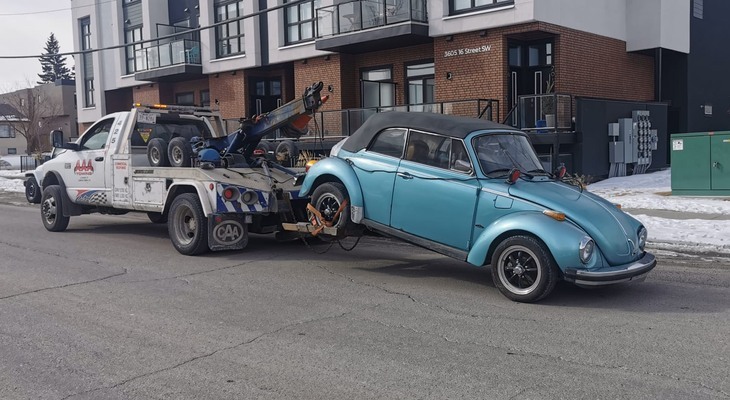
A car breakdown can happen without warning. You might notice an unusual noise, lose engine power, or find yourself stranded on a busy Calgary road. Knowing what to do when your car breaks down can help you stay safe and avoid making the problem worse. At AAA Towing, we provide roadside assistance in Calgary and surrounding areas, helping drivers deal with unexpected vehicle trouble. Whether you have a dead battery, an empty fuel tank, or a vehicle that needs towing, taking the right steps can make a stressful situation easier to manage.
What to Do When Your Car Breaks Down
If your car breaks down while driving, your first priority should be getting yourself and your passengers to safety. Avoid making sudden movements, and pay attention to the traffic around you.
A breakdown on a quiet residential street is very different from one on Deerfoot Trail or another busy Calgary road. The location, weather, and condition of your vehicle should guide your next steps.
Recognize the Warning Signs of a Breakdown
Most vehicles show signs of trouble before they stop working completely. Recognizing these symptoms can give you time to find a safer place to stop.
Watch for:
- Engine overheating: A rising temperature gauge, steam, or a temperature warning light may indicate a cooling system problem.
- Loss of engine power: Your vehicle may struggle to accelerate, hesitate, or stop responding normally.
- Unusual sounds: Grinding, knocking, or loud mechanical noises can indicate a serious issue.
- Steering difficulties: A sudden change in steering effort can make controlling the vehicle harder.
- Tyre problems: A flat tyre or sudden vibration may affect vehicle stability.
- Dashboard warnings: Oil pressure, battery, and engine warning lights may signal problems that need immediate attention.
If you notice these symptoms, avoid pushing the vehicle beyond its limits. Continuing to drive with certain mechanical problems can cause further damage.
Move Your Vehicle to a Safe Location
If your car is still moving and you can control it safely, signal and move toward a suitable stopping area.
Look for a parking lot, designated emergency stopping area, or wide shoulder where the vehicle will be away from moving traffic.
Do not make abrupt lane changes or cross several lanes to reach an exit. If the vehicle cannot move safely, stop as safely as possible and assess the situation.
Once stopped:
- Turn on your hazard warning lights.
- Apply the parking brake.
- Turn off the engine if it is safe and appropriate.
- Keep your seatbelt fastened while assessing traffic.
- Avoid stopping near blind curves or other areas with limited visibility when you have a safe alternative.
If the breakdown occurs in a live traffic lane or creates an immediate danger, call 911 and follow the instructions provided.
How to Stay Safe While Waiting for Roadside Assistance in Calgary
After stopping your vehicle, decide whether it is safer to remain inside or move to another protected location.
On busy roads, getting out of your vehicle can expose you to passing traffic. On quieter streets or in parking lots, moving to a safe area away from the roadway may be appropriate.
Decide Whether to Stay Inside Your Car
There is no single rule that applies to every roadside breakdown.
If your vehicle is safely positioned on a shoulder and traffic is passing nearby, staying inside with your seatbelt fastened may be safer until assistance arrives.
However, if your vehicle is smoking, leaking fuel, catching fire, or facing another immediate hazard, leave it when you can do so safely and move well away from traffic.
Never stand between your vehicle and passing traffic. Avoid opening doors into active lanes or walking along the edge of a busy roadway.
Our team encourages drivers to describe their surroundings when requesting help. This information allows dispatchers to understand potential hazards before sending assistance.
Make Your Vehicle Visible to Other Drivers
Visibility becomes especially important during Calgary’s winter months, when darkness, blowing snow, and poor road conditions can make a stopped vehicle harder to see.
Keep your hazard lights on if they are working. At night, use suitable vehicle lighting without creating glare for approaching drivers.
If you carry reflective warning devices, use them only when they can be placed safely. Do not walk into traffic to position a warning triangle.
Remember that your safety matters more than warning other motorists about the vehicle.
Check the Problem Without Putting Yourself at Risk
Once you are safely stopped, you may be able to identify the likely cause of the breakdown. However, roadside inspections should remain limited to what you can check without exposing yourself to traffic or mechanical hazards.
Common Reasons Cars Break Down on Calgary Roads
Several problems can leave a vehicle unable to continue.
Dead or weak battery
Cold temperatures can reduce battery performance, especially when the battery is already nearing the end of its service life. A clicking sound or failure to start may indicate a battery-related problem.
Flat or damaged tyre
Potholes, road debris, and tyre wear can contribute to punctures or sudden air loss. If a tyre is badly damaged, driving farther may harm the wheel or affect control.
Empty fuel tank
Running out of fuel can leave you stranded even when the vehicle has no mechanical fault. A roadside fuel delivery may help you reach a nearby service station.
Engine overheating
Coolant loss, cooling system faults, and other mechanical problems can cause an engine to overheat. Do not remove a hot radiator or coolant reservoir cap.
Electrical or mechanical failure
Alternator problems, broken belts, ignition faults, and other failures may prevent your vehicle from starting or operating properly.
Our roadside professionals can help with certain common problems. When a vehicle requires mechanical repairs, towing it to a suitable repair facility may be the safer option.
Follow Alberta’s Roadside Safety Rules
A breakdown affects more than the stranded driver. Passing vehicles, emergency responders, and tow truck operators can all face hazards at the roadside.
The Government of Alberta provides guidance on roadside worker safety, including rules requiring drivers to move over when safe or slow down when passing stopped roadside vehicles with activated flashing lights.
When drivers cannot safely change lanes, they must slow to 60 km/h or the posted speed limit, whichever is lower.
These rules help protect roadside workers, including towing operators assisting stranded motorists.
If you are waiting for a tow truck, avoid stepping into the roadway to direct approaching traffic. Let trained personnel manage the recovery process and follow any instructions from police or emergency responders.
When to Call for Emergency Roadside Assistance
Not every breakdown requires a tow truck immediately. Some problems can be resolved at the roadside, while others require professional transport.
At AAA Towing, we help drivers across Calgary and surrounding communities choose the appropriate type of assistance based on the condition and location of their vehicle.
Roadside Assistance for Minor Vehicle Problems
Certain breakdowns can be addressed without transporting the vehicle to a repair shop.
Depending on the situation, roadside assistance may include:
- Battery boosting: Helping restart a vehicle with a discharged battery when boosting is suitable.
- Fuel delivery: Bringing fuel to a driver whose vehicle has run out.
- Car lockout assistance: Helping motorists regain access to their locked vehicles.
- Winching services: Recovering vehicles stuck in snow, mud, or other difficult positions.
Before requesting help, describe what happened and any warning lights you noticed. This helps the service provider determine which equipment may be needed.
A battery boost, for example, may restart a vehicle, but it cannot repair a faulty alternator or an underlying charging system problem.
When Your Car Needs Professional Towing
Some vehicles should not be driven until they have been inspected or repaired.
Consider requesting a Calgary towing service if:
- The engine has overheated, and the problem remains unresolved.
- Your vehicle has a serious fluid leak.
- Steering or braking performance is affected.
- The vehicle has suffered collision damage.
- A tyre or wheel is too damaged for safe operation.
- The vehicle repeatedly stalls or cannot start.
- There are signs of serious mechanical failure.
Professional towing allows the vehicle to be transported without requiring you to drive it in an unsafe condition.
For all-wheel-drive vehicles, vehicles with limited ground clearance, or cars with specific manufacturer requirements, the appropriate towing method is particularly important. A flatbed or another suitable recovery setup may be required.
What Information to Give a Tow Truck Company
When requesting assistance, providing accurate information can make dispatch easier and help avoid delays.
Before calling, gather the following details if it is safe to do so:
- Your exact location: Share a road name, nearby intersection, exit number, or GPS location.
- Vehicle information: Provide the make, model, approximate size, and colour.
- Nature of the breakdown: Explain whether the vehicle has a flat tyre, engine problem, dead battery, or another issue.
- Vehicle condition: Mention whether the wheels roll, the transmission can shift into neutral, or there is collision damage.
- Roadside hazards: Tell dispatch if the vehicle is blocking traffic, stopped on a narrow shoulder, or in a difficult location.
- Preferred destination: If towing is required, identify the repair shop or other suitable destination.
If your vehicle is an electric or hybrid model, mention this when calling. Its towing and handling requirements may differ from those of a conventional vehicle.
Our dispatch team uses these details to arrange suitable roadside support or towing equipment.
What to Do While Waiting for a Tow Truck
Once assistance has been arranged, avoid unnecessary movement around the vehicle.
Keep your phone available so the dispatcher or operator can contact you. If your location changes or the situation becomes more dangerous, report the change immediately.
Prepare for the Tow Truck’s Arrival
If you can do so safely, keep your vehicle registration, identification, and destination details accessible.
Remove valuables and essential belongings before the vehicle is transported, provided you can retrieve them without entering an unsafe area.
When the tow truck arrives, follow the operator’s directions and remain clear of cables, hooks, loading equipment, and moving vehicles.
Do not attempt to push a disabled vehicle onto towing equipment unless the operator specifically directs you and the situation is safe.
Understand the Towing Process and Costs
Before the vehicle is transported, confirm where it will be taken and ask about the expected charges.
Costs may depend on the distance, vehicle type, required equipment, recovery conditions, and other service factors.
If your insurance policy includes roadside assistance or towing coverage, check the applicable terms. Coverage limits and claim procedures can differ between policies.
Keep your towing receipt and relevant service records. They may be helpful for insurance purposes or future vehicle repairs.
How to Reduce the Risk of Another Roadside Breakdown
You cannot prevent every vehicle failure, but routine maintenance can reduce the likelihood of becoming stranded.
Calgary drivers should pay particular attention to battery condition, tyre pressure, fluid levels, and seasonal weather changes.
Prepare Your Vehicle Before Longer Trips
Before driving outside Calgary toward Airdrie, Cochrane, Okotoks, or other surrounding communities, take a few minutes to check your vehicle.
Consider these basic precautions:
- Check tyre pressure and inspect for visible damage.
- Monitor engine oil and coolant levels according to manufacturer instructions.
- Have an aging or weak battery tested.
- Keep sufficient fuel in the tank or plan charging stops for an electric vehicle.
- Carry a charged phone and suitable charging cable.
- Keep an emergency kit with warm clothing, a flashlight, water, and basic supplies.
- Review weather conditions and road advisories before leaving.
During winter, pack additional warm clothing and blankets. A roadside delay can become more serious when temperatures drop.
Regular maintenance also matters. Address warning lights, fluid leaks, worn tyres, and unusual engine sounds before they become larger problems.
Our team recommends arranging a qualified mechanical inspection whenever a vehicle develops symptoms that could affect safe driving.
Conclusion
Knowing what to do when your car breaks down on the road can help you protect yourself, your passengers, and other motorists. Move to a safe location when possible, make your vehicle visible, avoid unsafe roadside repairs, and request professional help when needed. A quick response is useful, but safety should always come first.
At AAA Towing, we provide 24-hour towing and roadside assistance across Calgary and surrounding areas, including Airdrie, Cochrane, Chestermere, and Okotoks. Whether your vehicle needs a battery boost, fuel delivery, or professional towing, our team is ready to assist. If you are stranded or need reliable roadside support, contact us or call 403-287-9612 to request assistance.