When Should You Call a Tow Truck?
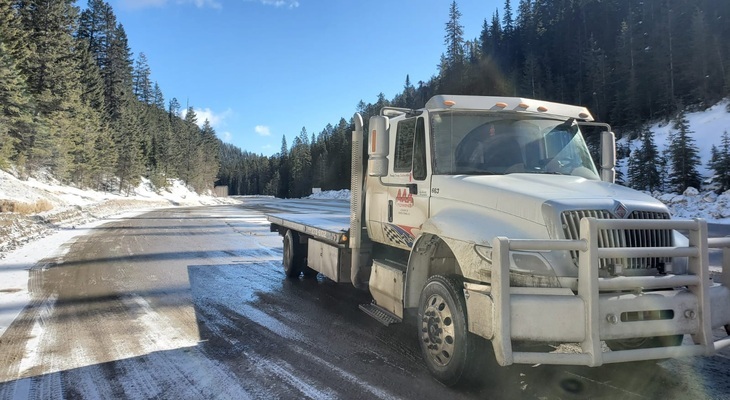
A vehicle that suddenly stops working can leave you unsure whether to keep driving, request roadside assistance, or arrange professional towing. Knowing when to call a tow truck can prevent further vehicle damage and help you avoid unsafe driving conditions. At AAA Towing, we provide 24/7 towing services in Calgary and surrounding communities for vehicles affected by mechanical failures, accidents, and other roadside problems. Our team helps drivers determine when towing is the safer choice and arranges suitable equipment to transport their vehicles.
When Should You Call a Tow Truck in Calgary?
You should call a tow truck when your vehicle cannot be driven safely, has suffered significant damage, or may develop a more serious problem if you continue driving. A vehicle does not need to be completely disabled to require towing.
For example, a car with a damaged steering system may still move, but driving it could put you and other motorists at risk. The same applies to vehicles with severe engine problems, damaged wheels, or leaking fluids.
The main warning signs include:
- Your engine overheats or repeatedly stalls.
- The vehicle loses braking or steering performance.
- You notice smoke, burning smells, or serious fluid leaks.
- A collision has damaged the wheels, suspension, or body.
- Your transmission stops engaging properly.
- Your vehicle becomes stuck and cannot be recovered safely.
- A breakdown leaves you stranded in a dangerous location.
If any of these situations occur, stop driving as soon as it is safe to do so and arrange professional assistance.
When to Call a Tow Truck Instead of Driving to a Mechanic
Driving a damaged vehicle to a nearby repair shop might seem easier than arranging a tow. However, even a short trip can worsen certain mechanical problems.
Consider an engine with low oil pressure. Continuing to operate it may cause severe internal damage. Similarly, driving with a damaged wheel bearing, steering component, or braking system can lead to a loss of vehicle control.
Our towing professionals recommend evaluating the symptoms rather than judging the problem by distance. A repair shop being only a few kilometres away does not necessarily make the trip safe.
When the vehicle’s roadworthiness is uncertain, professional towing is generally the safer option.
Call a Tow Truck When Your Engine Has Serious Problems
Engine trouble is one of the clearest reasons to stop driving. Some engine problems begin with minor symptoms, while others can quickly make a vehicle unsafe or inoperable.
Your Engine Is Overheating
An overheating engine may be caused by coolant loss, a faulty thermostat, a water pump problem, or another cooling system failure.
Warning signs can include:
- A temperature gauge moving into the red zone.
- Steam coming from beneath the hood.
- A coolant warning light.
- A noticeable loss of engine power.
- Coolant leaking beneath the vehicle.
If the engine overheats, find a safe place to stop and turn it off. Avoid opening the radiator cap or pressurized coolant reservoir while the system is hot.
If the cause cannot be safely identified and corrected, arrange towing rather than restarting the engine and continuing your trip.
Your Vehicle Has Low Oil Pressure
An illuminated oil pressure warning light can indicate that the engine is not receiving proper lubrication.
Although low oil levels are one possible cause, a faulty oil pump, internal engine problem, or other defect may also trigger the warning.
Continuing to drive can result in serious engine damage.
Stop as soon as it is safe, shut off the engine, and seek professional assistance. If the warning remains unexplained, towing the vehicle to a repair facility is the safer decision.
Your Engine Keeps Stalling
Repeated stalling can indicate problems with the fuel system, ignition system, electrical components, or engine management.
A vehicle that stalls while moving may become difficult to steer or brake, especially if power assistance is reduced.
Rather than repeatedly attempting to restart the vehicle in traffic, arrange an inspection and towing when necessary.
When to Call a Tow Truck After a Collision
Not every collision leaves a vehicle completely immobile. However, visible damage does not always reveal the full extent of the problem.
A damaged vehicle may have hidden faults affecting its suspension, steering, cooling system, or structural components.
Your Car Has Significant Accident Damage
Consider professional accident towing if:
- The wheels appear misaligned or damaged.
- Fluid is leaking beneath the vehicle.
- The steering wheel no longer responds normally.
- Airbags have deployed.
- Body panels are rubbing against the tyres.
- The vehicle cannot move without unusual noises or resistance.
Even if the engine starts, that does not confirm the vehicle is safe to drive.
If there are injuries, fire, an immediate traffic danger, or another emergency, call 911 first. Follow police or emergency personnel instructions before arranging vehicle removal.
Our team at AAA Towing provides accident towing and recovery services for Calgary motorists, helping arrange vehicle transport when driving is no longer appropriate.
Your Vehicle Is Blocking Traffic
A disabled vehicle stopped in an active traffic lane creates an immediate hazard.
If the vehicle can be moved safely to a suitable shoulder or parking area, do so without making sudden manoeuvres. If it cannot be moved safely, avoid attempting to push it through moving traffic.
Contact emergency services when the situation presents an immediate danger and follow their directions.
Once the scene is safe and towing is permitted, a professional operator can arrange the appropriate recovery.
When Roadside Assistance Is Enough and When Towing Is Necessary
Some vehicle problems can be resolved at the roadside without transporting the car. Others require a mechanic’s inspection or specialized recovery equipment.
Understanding the difference can help you request the right service.
| Vehicle problem | Roadside assistance may help | Towing may be necessary |
| Dead battery | Battery boosting | If the vehicle still will not start or charge properly |
| Empty fuel tank | Fuel delivery | If the vehicle will not restart after refuelling |
| Flat tyre | Tyre service, where available and safe | If the wheel is damaged or a safe repair is not possible |
| Car lockout | Vehicle unlocking | Usually unnecessary unless another problem exists |
| Engine overheating | Limited assessment | When overheating persists or the cause is unknown |
| Transmission failure | Usually not a roadside fix | When the vehicle cannot move or shift safely |
| Collision damage | Situation-dependent | When damage affects safe operation |
When a Battery Boost Is Not Enough
A dead battery does not always mean you need a tow truck.
If the battery is discharged but otherwise functional, a battery boost may restore power and allow the vehicle to start.
However, if the vehicle repeatedly loses electrical power, the alternator is failing, or the engine still will not start, towing may be necessary.
Our team can help determine whether the situation calls for battery boosting or vehicle transport based on the symptoms you report.
When a Flat Tyre Requires Towing
A flat tyre can sometimes be resolved by installing a suitable spare, provided the work can be performed safely.
Towing may be necessary when:
- The tyre has separated from the wheel.
- The rim is bent or cracked.
- Multiple tyres are damaged.
- No usable spare is available.
- The vehicle is stopped in an unsafe area.
- Suspension or steering damage is suspected.
Avoid driving on a completely flat tyre. Doing so can damage the wheel and make the vehicle harder to control.
When Should You Call a Tow Truck During Winter?
Calgary winters bring freezing temperatures, snow, ice, and changing road conditions. These factors can make a manageable vehicle problem more dangerous.
A stalled vehicle on an icy road or narrow shoulder may place occupants and passing motorists at risk.
Your Vehicle Is Stuck in Snow or Ice
If your vehicle is stuck in a snowbank, ditch, or icy parking area, avoid repeatedly spinning the wheels.
Excessive wheelspin can dig the tyres deeper into snow, damage components, or make recovery more difficult.
A suitable winching or recovery service may be able to free the vehicle. If mechanical damage has occurred, towing may also be required.
Tell the dispatcher whether your vehicle is on a paved road, in a ditch, or on uneven ground. This helps identify the appropriate recovery equipment.
Your Vehicle Breaks Down in Extreme Cold
A winter breakdown becomes more serious when the vehicle cannot provide heat.
Keep your phone charged and inform the dispatcher about your location, the number of passengers, and any immediate safety concerns.
If you are waiting inside a running vehicle, ensure the exhaust outlet is clear of snow and that exhaust gases cannot enter the cabin. Never operate an engine when the exhaust system is blocked.
When the vehicle cannot be operated safely, request professional assistance rather than continuing to drive.
Roadside Safety While Waiting for a Tow Truck
The safety of drivers, passengers, towing operators, and passing motorists should remain the priority during any roadside recovery.
The Government of Alberta explains its roadside worker safety requirements, which protect tow truck operators and other roadside personnel working near traffic.
Drivers approaching stopped roadside vehicles with activated flashing lights must move into a farther lane when safe. If they cannot safely move over, they must slow to 60 km/h or the posted speed limit, whichever is lower.
These requirements help reduce the risk of collisions involving roadside workers.
While waiting for assistance:
- Activate your hazard warning lights.
- Remain clear of moving traffic.
- Avoid standing between vehicles.
- Do not attempt mechanical repairs beside an active lane.
- Follow instructions from emergency responders and towing personnel.
- Move away from the vehicle if fire, smoke, or another immediate danger makes staying inside unsafe.
If you are stopped on a busy Calgary road, do not leave your vehicle simply to inspect damage when doing so would expose you to traffic.
Choosing the Right Towing Service for Your Vehicle
Different vehicles require different towing equipment. The correct method depends on the vehicle’s weight, drivetrain, condition, and manufacturer instructions.
When Flatbed Towing Is the Better Option
Flatbed towing places the vehicle on a truck platform rather than leaving some of its wheels on the road.
It may be suitable for:
- All-wheel-drive vehicles with specific transport requirements.
- Luxury and performance cars.
- Vehicles with severe wheel or suspension damage.
- Cars requiring transport without rolling on their own wheels.
- Certain electric and hybrid vehicles.
A professional towing operator should confirm the proper loading and securement procedure for your vehicle.
When Heavy Duty Towing Is Necessary
Passenger vehicles are not the only ones that need professional recovery.
Commercial trucks, buses, motorhomes, tractor-trailers, and other large vehicles may require heavy-duty towing equipment.
Their weight, dimensions, and mechanical configuration can make standard passenger vehicle towing unsuitable.
AAA Towing provides heavy-duty towing and equipment hauling services in Calgary and surrounding areas. Our team assesses the vehicle and recovery requirements to arrange suitable equipment.
What to Tell a Tow Truck Company Before Dispatch
Clear information helps the towing company understand your situation and prepare for the recovery.
When requesting a tow truck in Calgary, provide the following details:
- Exact location: Include the street, nearby intersection, highway exit, or GPS location.
- Vehicle details: Share the make, model, approximate weight or size, and drivetrain if known.
- Mechanical condition: Describe the breakdown, warning lights, damage, or unusual sounds.
- Vehicle position: Explain whether the vehicle is in a parking lot, on a shoulder, in a garage, or off the road.
- Recovery challenges: Mention locked wheels, damaged suspension, low ground clearance, or difficult access.
- Destination: Provide the address of the repair facility or another suitable drop-off location.
If the vehicle is in an underground parkade or another low-clearance area, mention the height restrictions before dispatch.
This information can prevent delays caused by unsuitable towing equipment.
Understand the Cost Before Your Vehicle Is Towed
Towing costs can vary depending on the vehicle, travel distance, equipment, location, and recovery complexity.
Before authorizing transport, ask about:
- The estimated towing charge.
- Any applicable hookup or recovery fees.
- Additional charges for difficult access or specialized equipment.
- The destination and any storage arrangements.
- Accepted payment methods.
- Whether your insurance or roadside assistance plan may cover the service.
Request a receipt and keep it with your vehicle repair or insurance records.
How to Avoid Unnecessary Towing
Professional towing is important when a vehicle is unsafe, but some roadside problems can be addressed without moving it to a repair shop.
Start by identifying the problem without exposing yourself to traffic or mechanical hazards.
For example, a vehicle that will not start after sitting overnight may need battery boosting. A driver who has run out of fuel may only require fuel delivery.
However, do not assume that a warning light or unusual noise is harmless just because the vehicle still moves.
Regular maintenance also helps reduce avoidable breakdowns. Check tyre condition, battery health, fluid levels, and recommended service intervals.
Before longer trips from Calgary to communities such as Airdrie, Cochrane, Chestermere, Okotoks, or High River, review the weather and ensure your vehicle is in suitable operating condition.
When in doubt, describe the symptoms to a qualified automotive professional and avoid driving a vehicle whose safety is uncertain.
Conclusion
Knowing when to call a tow truck helps you make safer decisions when your vehicle develops mechanical problems, suffers collision damage, or becomes stranded. If your engine overheats, your brakes or steering are affected, or your vehicle cannot operate safely, professional towing is generally the better choice. For simpler problems, roadside assistance may be enough to get you moving again.
At AAA Towing, we provide 24-hour towing, roadside assistance, accident recovery, flatbed towing, and heavy-duty towing across Calgary and surrounding communities. Whether you need help with a disabled passenger car or a commercial vehicle, our team can arrange suitable assistance. Contact us or call 403-287-9612 to request towing support.