What Information Does a Tow Truck Dispatcher Need?
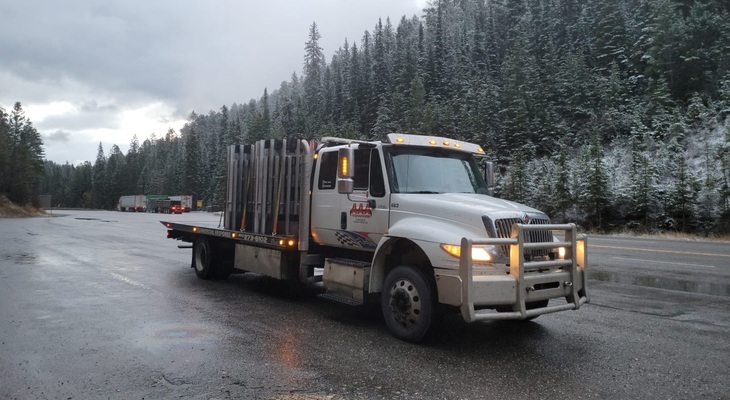
When your vehicle breaks down, knowing what information a tow truck dispatcher needs can make it easier to arrange help. The dispatcher needs your location, vehicle details, type of problem, roadside conditions, and towing destination. At AAA Towing, our team uses these details to arrange suitable towing services in Calgary and surrounding areas. Whether your car has stopped working on Deerfoot Trail or your commercial truck needs recovery outside the city, providing accurate information helps us understand the situation and select the appropriate towing equipment.
What Information Does a Tow Truck Dispatcher Need Before Sending Help?
A tow truck dispatcher needs enough information to locate your vehicle, assess the problem, and determine which towing service is suitable. Not every detail needs to be available when you first call.
The most important information includes:
- Your exact location and direction of travel.
- Your name and contact number.
- The vehicle’s make, model, colour, and approximate size.
- A description of the breakdown or accident.
- Whether the vehicle can move, steer, or roll.
- Any immediate dangers or access restrictions.
- The location where you want the vehicle delivered.
Our dispatch team may ask additional questions depending on the type of vehicle and the recovery conditions.
Why Tow Truck Dispatchers Ask Detailed Questions
Not every roadside incident requires the same equipment. A passenger car with a dead battery has different needs from a delivery truck stuck in a ditch.
A dispatcher uses the information you provide to understand whether the situation requires roadside assistance, flatbed towing, accident recovery, or heavy-duty towing.
Accurate details can also reduce the chance of sending equipment that cannot safely complete the job.
For example, a vehicle with damaged wheels may require a different loading method from one that rolls freely. Similarly, a vehicle in an underground parkade may require equipment that can operate within height restrictions.
The goal is to arrange the right assistance for the actual conditions rather than making assumptions about the breakdown.
Share Your Exact Location With the Tow Truck Dispatcher
Your location is usually the first detail a dispatcher needs. An accurate location helps the operator find your vehicle without unnecessary searching.
Give a Street Name, Intersection, or Highway Exit
If you are within Calgary, provide the nearest street address or major intersection.
For highway breakdowns, identify the road, direction of travel, and nearby exit or landmark.
Useful location descriptions include:
- Northbound Deerfoot Trail near a specific exit.
- Stoney Trail with the direction of travel and closest interchange.
- A parking lot near a named shopping centre.
- A residential street with the nearest intersection.
- A commercial yard with a numbered entrance.
Simply saying that you are on Deerfoot Trail may not provide enough information. Long roads can have several access points and traffic directions.
Use GPS When You Are Unsure of Your Location
If you do not know the street name, your phone’s mapping application may help identify your position.
Share the location pin, nearby road names, or GPS coordinates with the dispatcher if requested.
Before reporting the location, check that the map reflects where you are actually stopped. A phone may display a nearby road rather than your exact position, especially around interchanges or service roads.
Do not walk into traffic or leave a safe area to find a street sign.
Our team also recommends mentioning nearby access points when your vehicle is on private property, at a construction site, or inside a gated facility.
Provide Your Vehicle’s Make, Model, and Size
Vehicle information helps determine what equipment may be required for towing.
A standard passenger car may need different handling from a large pickup truck, motorhome, or commercial vehicle.
Details a Tow Truck Dispatcher Needs About Your Vehicle
Be prepared to share:
- Make: The vehicle manufacturer, such as Ford, Toyota, or Honda.
- Model: The specific vehicle model.
- Year: The approximate model year, if known.
- Colour: A useful detail for identifying your vehicle.
- Vehicle type: Sedan, SUV, pickup truck, van, or commercial truck.
- Drivetrain: Front-wheel drive, rear-wheel drive, or all-wheel drive, if known.
- Modifications: Lift kits, lowered suspension, oversized tyres, or other changes that may affect loading.
You do not need to know every technical specification. Provide the details you have and explain anything you are unsure about.
Why Vehicle Weight and Drivetrain Matter
Vehicle weight influences the towing equipment and capacity required.
A large pickup truck, for example, may need different equipment from a compact sedan.
Drivetrain configuration also affects towing methods. Some all-wheel-drive and electric vehicles have specific manufacturer requirements that must be followed to prevent damage.
For this reason, a dispatcher may ask whether your vehicle has all-wheel drive or requires flatbed transportation.
Providing this information before the truck arrives helps the towing operator prepare for the vehicle’s handling requirements.
Explain Why You Need a Calgary Towing Service
A clear description of the problem is just as important as your location.
You do not need to diagnose the mechanical failure. Describe what happened, what you noticed, and whether the vehicle can operate.
Describe the Vehicle Breakdown
A dispatcher may ask whether:
- The engine starts or turns over.
- The vehicle stalled while driving.
- A warning light appeared on the dashboard.
- The engine is overheating.
- A tyre or wheel is damaged.
- Fluid is leaking beneath the vehicle.
- The transmission shifts into gear.
- The steering or brakes are functioning normally.
If you heard a loud noise before the vehicle stopped, mention it.
For example, explaining that the vehicle overheated and shut down is more useful than saying it simply stopped working.
Our team can use this description to determine whether towing is likely necessary or whether another roadside service may be appropriate.
Explain if the Vehicle Was Involved in an Accident
If you need accident towing, tell the dispatcher about any visible damage and the vehicle’s position.
Mention whether the airbags deployed, the wheels are damaged, or the vehicle is blocking a lane.
If police or emergency responders are attending, explain whether they have provided instructions about vehicle removal.
For injuries, fire, serious hazards, or immediate danger, call 911 first. Towing arrangements should not interfere with emergency response.
Tell the Dispatcher Whether Your Vehicle Can Move
A vehicle’s mobility can affect how it is loaded and transported.
This is especially important when the engine will not start, the wheels are damaged, or the transmission is stuck.
Report Locked Wheels or Steering Problems
Let the dispatcher know if:
- The wheels cannot turn.
- The transmission will not shift into neutral.
- The steering wheel is locked.
- The parking brake will not release.
- The vehicle has damaged suspension components.
- The tyres are missing or badly damaged.
These conditions may require specialized loading equipment or additional recovery procedures.
Do not force the transmission, release an unsafe vehicle, or attempt to move damaged wheels to make the towing process easier.
The towing operator can assess the vehicle and select an appropriate recovery method.
Mention Electric and Hybrid Vehicles
Electric and hybrid vehicles may require particular loading and transportation procedures.
Some manufacturers restrict towing with drive wheels on the ground. Others specify how the vehicle should be secured or placed in transport mode.
Tell the dispatcher if your vehicle is electric or hybrid, especially if it cannot power on or shift into neutral.
If a high-voltage battery appears damaged, is smoking, or presents another immediate hazard, move to a safe distance and contact emergency services.
Report Roadside Hazards and Access Restrictions
The dispatcher needs to know whether the towing location presents safety or equipment-access challenges.
A vehicle parked in an open lot is generally easier to reach than one stopped on a narrow highway shoulder or inside an underground garage.
Explain Traffic and Weather Conditions
Calgary motorists may experience breakdowns during snowstorms, freezing temperatures, heavy traffic, or reduced visibility.
Tell the dispatcher if your vehicle is:
- Stopped in an active traffic lane.
- On a narrow highway shoulder.
- Partially blocking an intersection.
- Stuck in a snowbank or ditch.
- On an icy slope or uneven surface.
- In an area with limited visibility.
If conditions change while you are waiting, update the towing company.
The Government of Alberta provides roadside worker safety guidance explaining the rules for passing stopped roadside vehicles with activated flashing lights. Drivers must move over when safe or slow to 60 km/h or the posted speed limit, whichever is lower, when they cannot safely move over.
These requirements help protect tow truck operators and other people working near moving traffic.
Mention Underground Parking and Restricted Access
Underground parkades and secured properties can present additional towing challenges.
If your vehicle is inside a parkade, tell the dispatcher:
- The maximum entrance height.
- The parking level.
- Whether the vehicle is in a tight stall.
- The location of the entry and exit ramps.
- Whether a security guard or property manager must provide access.
A standard tow truck may not fit inside a low-clearance garage.
At AAA Towing, our team provides towing and vehicle recovery services for different situations. Describing access restrictions allows dispatch to assess whether suitable equipment can reach the vehicle.
Give the Dispatcher Your Towing Destination
Before arranging vehicle transportation, the dispatcher may ask where you want the vehicle delivered.
This could be a repair shop, dealership, approved storage facility, or another suitable location.
Confirm the Repair Shop Address
Provide the business name, complete address, and contact details when possible.
It is also helpful to confirm whether the repair facility can accept the vehicle, especially outside regular business hours.
If the shop is closed, ask about its after-hours vehicle drop-off procedure before choosing it as the destination.
Do not assume that every repair facility accepts unattended deliveries.
Check Insurance and Roadside Assistance Coverage
Some insurance policies and vehicle assistance plans include towing benefits.
Coverage may depend on the cause of the breakdown, distance, approved service providers, or the type of vehicle.
Before confirming a destination, check whether your policy has relevant restrictions.
Ask the towing company about estimated charges and keep your service receipt for your records.
What a Tow Truck Dispatcher Needs for Heavy Duty Towing
Commercial vehicles often require more detailed information than passenger cars.
A tractor-trailer, motorhome, delivery truck, or piece of heavy equipment may have special weight, dimension, and recovery requirements.
Provide Commercial Vehicle Details
For heavy-duty towing in Calgary, a dispatcher may need:
- Vehicle type and configuration.
- Make and model.
- Approximate gross vehicle weight.
- Number of axles.
- Whether a trailer is attached.
- Whether the vehicle is loaded or empty.
- Approximate cargo weight and type.
- Location and accessibility.
- Description of the mechanical or recovery problem.
If the vehicle carries dangerous goods, mention this immediately and follow any applicable emergency instructions.
Our heavy-duty towing team uses the available information to assess the equipment required for recovery and transport.
Explain the Condition of Trailers and Cargo
For a disabled tractor-trailer, the towing company may need to know whether the trailer remains attached and whether its load has shifted.
Unstable cargo, damaged axles, or a vehicle resting on uneven ground can complicate recovery.
Drivers should not attempt to move unsecured cargo or disconnect damaged equipment without suitable training and a safe procedure.
Accurate information allows the towing company to evaluate the recovery requirements before work begins.
What Happens After You Contact a Tow Truck Dispatcher?
Once the dispatcher has the necessary details, the next step is arranging the appropriate service.
Our dispatch process is designed to connect the information you provide with suitable available towing equipment.
Dispatch Reviews Your Service Request
The dispatcher reviews the location, vehicle type, condition, and access requirements.
Depending on the situation, the appropriate response may involve:
- Standard vehicle towing.
- Flatbed towing.
- Accident recovery.
- Heavy-duty towing.
- Winching or vehicle recovery.
- Roadside assistance.
The dispatcher can then provide available service information and an estimated arrival time based on current conditions.
Arrival times may vary with traffic, weather, service demand, and the complexity of the recovery.
Prepare for the Tow Truck’s Arrival
After requesting help, keep your phone available for updates.
If it is safe, have your vehicle keys, repair shop address, and relevant information ready.
Avoid standing beside moving traffic or attempting to prepare damaged towing components yourself.
When the operator arrives, follow their instructions and remain clear of loading equipment, cables, and moving vehicles.
A Quick Checklist Before Calling a Tow Truck in Calgary
You do not need to memorize every question a dispatcher might ask. Keeping a short checklist on your phone can make the call easier.
Before calling, gather these details if it is safe:
- Location: Exact address, intersection, highway exit, or GPS position.
- Contact: Your name and a working phone number.
- Vehicle: Make, model, colour, and vehicle type.
- Problem: What happened and whether the engine starts.
- Mobility: Whether the vehicle can steer, roll, or shift into neutral.
- Safety: Traffic hazards, weather conditions, or accident damage.
- Access: Parking restrictions, gates, clearance limits, or difficult terrain.
- Destination: Repair shop or other approved delivery address.
If you cannot provide every detail, explain what you know. Your safety should come before gathering additional information.
A clear description is often more helpful than guessing about the mechanical cause.
Conclusion
Knowing what information a tow truck dispatcher needs can make requesting assistance simpler and help the towing company prepare for your situation. Your exact location, vehicle details, breakdown symptoms, roadside hazards, and towing destination are the most useful details to provide. For commercial vehicles or difficult recoveries, additional information about weight, cargo, and access may also be necessary.
At AAA Towing, we provide 24/7 towing, roadside assistance, vehicle recovery, and heavy-duty towing across Calgary and surrounding areas, including Airdrie, Cochrane, Chestermere, Okotoks, and High River. Whether you need a tow truck for your car or assistance with a commercial vehicle, our team is available to help. Contact us or call 403-287-9612 to request towing assistance.