Car Battery Boosting With Remote Terminals for Calgary Drivers
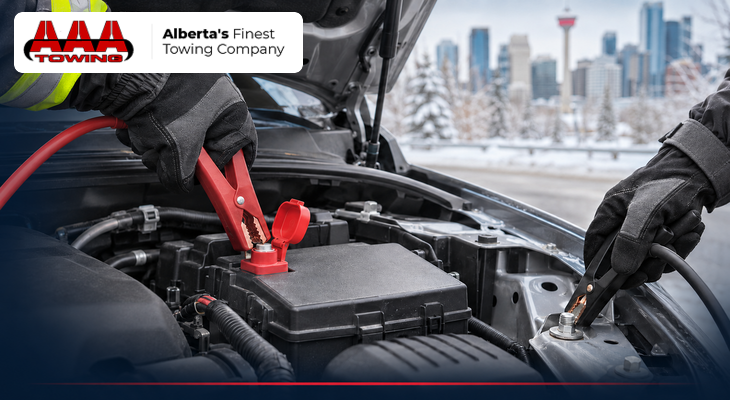
When the temperature drops below minus 20 on a Calgary morning, a dead battery rarely announces itself politely. The engine clicks, the dash flickers, and you are late. Many drivers already know that car battery boosting is a quick fix. Far fewer know that some vehicles cannot be boosted at the battery itself, and that a few details shared with dispatch can decide whether the job takes ten minutes or an hour.
At AAA Towing, we help drivers across Calgary and the surrounding areas with this every winter, and this guide covers what to say when you call.
Why Car Battery Boosting Starts With the Right Information
Our dispatchers do not ask questions to slow you down. Each answer helps us send the right truck, the right equipment, and the right technician the first time. A driver who says “my car won’t start” gives us very little to work with. A driver who says “my car clicks, the battery is under the back seat, and there are remote terminals under the hood” gives us a clear plan.
Our professionals handle hundreds of cold weather calls every season, and we see the same pattern. Most delays do not come from the boost itself. They come from missing details about where the terminals are, what kind of vehicle it is, and where the car is parked.
What Remote Battery Terminals Are
Remote battery terminals, sometimes called jump posts, are connection points placed away from the battery. Manufacturers add them when the battery sits somewhere hard to reach, such as:
- Under a rear seat
- In the trunk or cargo area
- Beneath a wheel well liner or fender
- Behind a plastic cover that needs tools to remove
Many newer sedans, SUVs, and some trucks use this design. The remote positive terminal is usually a red cap under the hood, often inside the fuse box or near it. The negative connection is normally a bare metal ground point on the engine or frame. Your owner’s manual shows both locations, and it is worth reading before winter arrives.
What Calgary Drivers Should Tell Dispatch About Car Battery Boosting
When you call, our team works through a short list of questions. If you have the answers ready, we can move faster.
Vehicle Details That Matter
Give us the year, make, and model. These details tell us whether your vehicle has remote terminals, whether it needs a specific boosting method, and whether a standard jump is safe for its electrical system.
Also mention if your vehicle is:
- A hybrid or electric vehicle, which often has a separate 12 volt battery that needs special handling
- A diesel truck with dual batteries
- A vehicle with start-stop technology
- A commercial vehicle, since larger rigs may need heavy-duty towing in Calgary if a boost does not solve the problem
What You Heard and Saw When It Failed
The symptoms tell us a lot. Please describe what happened in plain words:
- Rapid clicking usually points to a weak battery
- A single loud click may suggest a starter or connection problem
- No sound and no lights often mean a fully drained battery or a loose terminal
- Slow, groaning cranking is common in extreme cold
- Dim headlights or a flashing dash can signal a failing alternator
If the battery died after you left the lights on, tell us. If it has been struggling for weeks, tell us that too. A battery that is simply drained responds well to boosting. One that is damaged or frozen may not.
Your Exact Location and Parking Situation
Calgary has plenty of tight underground parkades, snowy back lanes, and busy shopping centre lots. Tell us:
- The street address or the closest intersection
- Whether you are in a parkade and what level
- Whether the vehicle is nose-in or backed into the stall
- Whether another vehicle is parked beside you
- Any gate codes or access instructions
Our truck needs space to get close, and in a packed parkade that can change how we approach the job.
Locating Remote Terminals Before Our Team Arrives
You do not have to do this yourself, and we never expect you to take risks in the cold. But if you are safe and comfortable, a few quick checks help.
Look Under the Hood First
Open the hood and look for a red plastic cap marked with a plus sign. It is often attached to a small fuse box. Lift the cap gently, and you will see the metal post. Take a photo if you can, and tell dispatch what you found. If you cannot find it, say so. Our technicians know where to look on most models.
Do Not Force Anything
Never pry open covers, pull on wires, or touch anything that looks damaged. Frozen plastic is brittle in Calgary winters, and a cracked cover or snapped clip can turn a simple boost into a repair. If something does not open easily, leave it for our professionals.
Keep Your Keys and Manual Handy
Having the owner’s manual in the glove box saves time. Some manuals show the exact terminal locations and warn against certain boosting methods. If you are in a rental or borrowed vehicle, tell us, because the layout may differ from what you expect.
Why Winter Changes Car Battery Boosting in Calgary
Cold is hard on batteries. A battery loses a large share of its starting power as temperatures fall, while the engine needs more power to turn over thick, cold oil. That combination is why dead battery calls spike during the first deep freeze of the season.
For current conditions and cold warnings in our area, the Government of Canada’s weather forecasts and alerts are a reliable source. When an extreme cold warning is in effect, we recommend that you plan ahead, check your battery, and keep your phone charged.
Signs Your Battery May Not Survive a Cold Snap
Watch for these early warnings:
- Slower engine cranking over the past few weeks
- Dimming headlights when the heater or defrost is on
- A battery older than four or five years
- White or blue corrosion around the terminals
- A swollen or bulging battery case
If you notice any of these, a quick test at a shop is inexpensive compared with a roadside emergency at minus 30.
When Car Battery Boosting Is Not Enough
Sometimes a boost gets the engine running, but the underlying problem remains. A battery that will not hold a charge, a bad alternator, or a parasitic drain will leave you stranded again. Our technicians will tell you honestly if a boost is only a temporary fix. If the vehicle cannot be started safely, we can tow it to a repair shop of your choice rather than send you off with a gamble.
What Happens During a Professional Car Battery Boosting Visit
Knowing the process helps you feel at ease while you wait. At AAA Towing, our technicians follow a consistent approach designed to protect your vehicle and your safety.
Step by Step on Arrival
- We confirm your vehicle details and check the surroundings for hazards.
- We inspect the battery or remote terminals for damage, corrosion, or leaks.
- We connect our booster to the correct positive and negative points, using the grounding location the manufacturer recommends.
- We apply the boost and allow a short period for the charge to build.
- We start the engine, check the dash for warning lights, and disconnect in the proper order.
- We advise you on next steps, such as testing the battery or driving for a period to recharge it.
Why We Use Professional Equipment
Boosting a modern vehicle requires the correct connection points and procedure. Incorrect connections can damage electrical components, and sparks near a battery can be dangerous. Our professionals use protected boosting equipment that limits the risk, which is especially important on vehicles with remote terminals and sensitive electrical systems.
After the Engine Starts
Do not shut the vehicle off right away. Let it run, or drive for at least 20 to 30 minutes if conditions are safe, so the alternator can restore some charge. Turn off extra loads such as heated seats and the rear defrost for the first few minutes if you can. If the engine stalls again soon after, the issue is likely deeper than a drained battery.
Staying Safe While You Wait in Winter Weather
A dead battery on a cold Calgary day is more than an inconvenience. It can become a safety concern if you wait long in poor conditions.
- Turn on your hazard lights and move to a safe location away from traffic if you can do so safely. Follow dispatch or emergency-service instructions about where to wait.
- Dress warmly and keep a blanket, gloves, and a toque in your trunk
- Stay clear of traffic if you must step out, and never stand behind the vehicle
- Keep your phone charged and share your location with dispatch
- If you are on a rural road outside the city, tell us the nearest landmark or highway marker
For drivers heading toward Airdrie, Cochrane, Chestermere, Okotoks, or other surrounding areas, extra distance can mean a longer wait in bad weather. Giving clear directions at the start helps our team reach you sooner.
Preparing Your Vehicle Before the Next Cold Snap
The best boost is the one you never need. A little preparation goes a long way before winter hits.
A Simple Pre-Winter Checklist
- Have your battery tested before November
- Clean corrosion from terminals and make sure connections are tight
- Park in a garage or use a block heater on very cold nights
- Keep the fuel tank at least half full
- Save our number and your vehicle details in your phone
- Know where your remote terminals are and take a photo of them
Why Local Experience Matters
Calgary winters bring chinooks, sudden freezes, and long stretches of extreme cold. Our team works through them every year, and that experience shapes how we prepare. At AAA Towing, we keep our trucks stocked and our technicians trained for the conditions our community faces, so a call at 6 a.m. in January gets the same attention as one in July.
Conclusion
Car battery boosting is a simple service, but the details you share with dispatch make it faster and safer, especially when your vehicle has remote battery terminals. Give us your vehicle details, describe the symptoms, share your exact location, and mention any parking limits. Those few minutes of preparation can save you a long, cold wait.
If your battery fails this winter, or you want to ask about a service before you need it, reach out to the team at AAA Towing or visit our Contact Us page. We are here to help Calgary drivers get moving again, no matter how low the temperature falls.