By March, many fleet managers start feeling optimistic.
The sun stays out longer. Temperatures rise above freezing. Snow begins to melt. Spring feels close enough to taste.
And that is when late winter reminds everyone who is still in charge.
March is one of the most challenging months for commercial and heavy-duty vehicles across Calgary and Alberta. Roads remain unstable. Equipment is worn down. Traffic volumes increase. Construction and logistics activity accelerates.
For businesses that rely on trucks, trailers, and industrial vehicles, March is not a “wind-down ” month. It is a high-risk transition period where proper commercial towing planning becomes essential.
Professional towing support is not something you think about after a breakdown. It is something you secure before winter takes another swing.
March Creates Some of the Most Dangerous Driving Conditions of the Season
Alberta winters do not end neatly. They fade out slowly and unpredictably.
March delivers a combination of melting snow, overnight freezing, slush buildup, and sudden storms. This creates constantly changing road conditions that increase the risks of accidents and breakdowns.
Freeze-Thaw Cycles Complicate Heavy-Duty Recovery
During the day, ice melts. At night, everything refreezes.
Parking lots, shoulders, job sites, and loading areas turn into uneven ice fields. For heavy vehicles, this creates serious recovery challenges:
- Limited traction for winching
- Unstable ground under recovery equipment
- Reduced access to disabled units
- Increased rollover and sliding risks
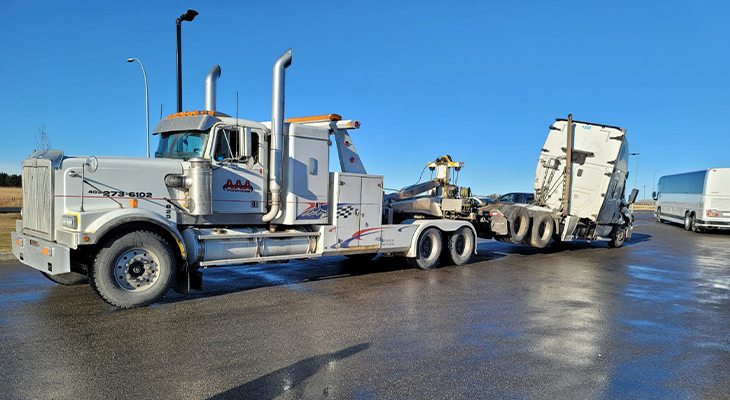
Heavy-duty towing in March requires advanced equipment and experienced operators who understand late winter recovery techniques.
Slush and Water Damage Increase Mechanical Failures
March roads are wet, salty, and dirty.
Slush and water penetrate electrical systems, braking components, and engine compartments. Over time, this causes:
- Starting failures
- Sensor malfunctions
- Brake issues
- Electrical shorts
Many commercial vehicle breakdowns in March are delayed reactions to winter exposure from earlier months.
Late Winter Fatigue Increases Breakdown Frequency
By March, commercial vehicles have endured months of cold starts, rough roads, and extended idling.
That stress accumulates.
Winter Usage Takes a Toll on Fleet Vehicles
After four to five months of winter operations, most fleets experience:
- Weakened batteries
- Worn suspension components
- Reduced tire performance
- Increased drivetrain strain
Even well-maintained vehicles begin showing fatigue.
March is when “almost fine” turns into “suddenly not moving.”
Minor Problems Become Major Failures
A slightly weak alternator in December is manageable.
That same alternator in March, after months of stress, becomes a roadside recovery.
Late winter is when unresolved maintenance issues surface. Without reliable commercial towing support, these failures lead to extended downtime.
Spring Activity Starts Before Winter Ends
March is when many industries begin ramping up operations.
Construction resumes. Infrastructure projects restart. Shipping volumes rise. Equipment moves between sites.
All while winter conditions remain active.
Construction and Industrial Operations Increase
March marks the return of large-scale projects across Alberta.
This includes:
- Heavy equipment transport
- Remote site access
- Temporary road networks
- Unfinished infrastructure zones
Recovering vehicles in these environments requires specialized industrial towing and recovery services.
Logistics and Distribution Demand Rises
Warehouses, suppliers, and distributors increase activity in March.
More routes mean more exposure. One disabled truck can disrupt multiple delivery schedules without proper fleet towing support.
Why Waiting Until Spring to Plan Towing Is a Costly Mistake
Some businesses assume they can “deal with towing later.”
That strategy rarely ends well.
Reactive Towing Increases Downtime
Without a pre-arranged heavy-duty towing provider, every incident becomes a scramble.
You face:
- Longer wait times
- Limited equipment availability
- Inexperienced operators
- Unpredictable recovery outcomes
Meanwhile, vehicles sit idle and operations stall.
Improvised Recovery Creates Liability
Late winter recoveries leave little room for error.
Using the wrong equipment or provider increases the risk of:
- Vehicle damage
- Load shifting
- Site damage
- Workplace safety incidents
One poorly handled recovery can cost more than months of proper planning.
How Commercial Towing Planning Supports Business Continuity
Commercial towing planning is not about expecting failure. It is about protecting productivity.
Pre-arranged Heavy Duty Towing Keeps Operations Moving
When towing support is established in advance:
- Dispatch understands your fleet
- Equipment is properly matched
- Response times are reduced
- Communication is streamlined
Recoveries become controlled processes instead of emergencies.
Managers Maintain Control During Incidents
With planned commercial towing support, managers know:
- Who is responding
- What equipment is arriving
- How long recovery will take
- What documentation is required
This clarity reduces stress and prevents operational chaos.
What Commercial Operators Should Review in March
March is an ideal time for a late-winter operational review.
Not when spring arrives. Now.
Fleet Specifications and Recovery Requirements
Review:
- Gross vehicle weights
- Axle configurations
- Trailer connections
- Specialized equipment
Your towing provider should already know these details.
Operating Zones and Coverage Areas
Confirm support across:
- Calgary urban corridors
- Highway routes
- Industrial parks
- Construction zones
- Remote sites
Late winter accessibility varies widely.
Dispatch and Response Procedures
Establish:
- Primary contact points
- Emergency escalation paths
- Required incident information
- Reporting protocols
Strong systems prevent confusion under pressure.
Why March Planning Creates a Smoother Spring Transition
March determines how smoothly your business enters spring.
Prevents Late Winter Bottlenecks
March storms often arrive after weeks of mild weather. Demand spikes suddenly. Providers become overwhelmed.
Pre-planning keeps your fleet ahead of the rush.
Reduces Spring Maintenance Backlogs
Efficient recoveries return vehicles to service faster. This prevents repair facilities from becoming overloaded in April and May.
Why Heavy Duty and Commercial Towing Requires Specialists
Not every towing company can handle commercial recoveries.
Especially in late winter conditions.
Specialized Equipment and Training Are Essential
Professional heavy-duty towing requires:
- Rotator wreckers
- Heavy recovery units
- Air cushion systems
- Advanced rigging
- Certified operators
This is technical work, not trial and error.
March recoveries involve weather, traffic, safety regulations, and site restrictions. Experienced dispatch teams coordinate resources efficiently and safely.
Commercial Late Winter Readiness Starts With AAA Towing
AAA Towing provides professional heavy-duty towing, commercial recovery, and industrial towing services across Calgary and Alberta.
Our approach focuses on:
- Controlled recovery procedures
- Professional dispatch coordination
- Fleet-specific support
- Equipment matched to real conditions
March is the ideal time to review your commercial towing strategy, confirm coverage, and prepare for the final stretch of winter.
Spring will arrive.
Eventually.
But March decides how much it costs you to get there.
Plan your heavy-duty towing and commercial recovery support before late winter disruptions slow your operations. Connect with the AAA Towing dispatch team to review your fleet readiness today.
Fast & Reliable Towing
We make sure each customer is completely satisfied before we leave the job.