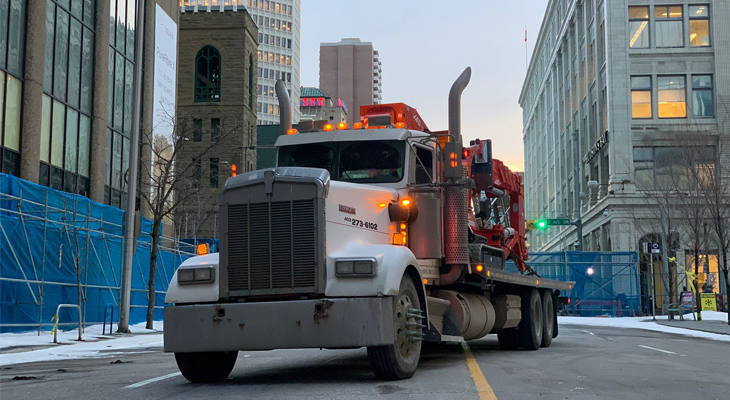
Traffic in Calgary moves efficiently when roads remain clear. Urban congestion escalates quickly when a large vehicle breaks down in a restricted area. One disabled commercial unit can block lanes, delay transit, and disrupt surrounding routes within minutes.
Urban recoveries demand specialized solutions. Heavy towing plays a critical role in restoring traffic flow safely and efficiently. It focuses on controlled recovery, proper equipment, and experienced execution.
Professional commercial vehicle recovery services in Calgary support urban mobility by removing large obstructions before congestion spreads further.
This blog explains how heavy towing prevents traffic backups during urban recoveries and why it matters for Calgary drivers and businesses.
Why Urban Recoveries Create Traffic Congestion So Quickly
Urban road networks are designed for continuous movement. When that movement stops, congestion builds fast. City streets have limited shoulder space and fewer alternate routes.
Large vehicles amplify this problem. A stalled truck occupies more road width than passenger vehicles. Drivers slow down to navigate around it. Intersections begin to stack.
Public transit routes also suffer delays. Emergency access becomes restricted. What begins as a single breakdown quickly affects multiple blocks.
Urban recoveries require precise action to prevent these cascading effects.
How Heavy Towing Improves Traffic Flow in Urban Areas
Qualified heavy-duty towing services focus on recovery efficiency rather than relocation alone. Each decision aims to reduce how long traffic remains disrupted.
Operators plan vehicle stabilization, movement direction, and clearance points before recovery begins. This planning limits unnecessary stops and lane closures.
Urban traffic flow depends on predictability. Heavy towing provides that predictability during recovery operations. Let’s look into 7 ways that help prevent traffic blockages during urban recoveries.
- Heavy Towing Clears Blocked Lanes Efficiently
Blocked lanes cause immediate congestion. Heavy towing crews prioritize securing the disabled vehicle first.
Stabilization prevents uncontrolled movement during lifting. Once secured, the vehicle moves directly toward clearance without delays.
This approach eliminates repeated adjustments. Traffic lanes reopen sooner. Congestion dissipates faster. Efficient lane clearing prevents backups from spreading across connected intersections.
- Specialized Equipment Limits Recovery Footprint
Urban streets restrict space for recovery operations. Heavy towing equipment is designed to operate within tight clearances.
Specialized tow trucks lift and control weight without occupying multiple lanes. Operators position equipment to minimize encroachment.
This reduced footprint allows traffic to continue flowing beside recovery zones. Drivers maintain steady movement instead of complete stops. Proper equipment selection directly affects congestion duration.
- Controlled Vehicle Movement Prevents Secondary Obstructions
Improper towing often causes secondary problems. Cargo shifts. Vehicles roll unexpectedly. Equipment slips.
Heavy towing prevents these issues through controlled movement. Operators maintain stability during every phase of recovery.
Stable movement avoids new blockages that worsen congestion. Traffic disruption ends with the initial recovery instead of extending further.
- Clear Visibility Keeps Traffic Predictable
Drivers react based on what they see. Confusion leads to sudden braking and lane changes.
Heavy towing crews establish clear visual zones. Recovery vehicles, lighting, and positioning guide traffic behaviour.
Predictable traffic movement reduces shockwave congestion. Vehicles pass recovery sites smoothly without hesitation. Visibility control keeps traffic steady during urban recoveries.
- Timing Decisions Reduce Peak Hour Congestion
Urban traffic fluctuates throughout the day. Heavy towing operators understand these patterns.
When possible, recovery movement aligns with lower traffic volumes. Even short delays become manageable outside peak periods.
Thoughtful timing reduces overall congestion impact. Traffic flow stabilizes sooner across surrounding routes. Timing decisions play a quiet but critical role in urban recoveries.
- Compliance Reduces Repeat Breakdowns
Commercial vehicle compliance affects road reliability. Commercial vehicles must meet safety standards before operating on Alberta roads.
Heavy towing supports vehicles that meet these requirements. Proper recovery reduces stress on vehicle systems. Preventing repeat failures avoids recurring congestion at the same location.
- Experience Shortens Recovery Duration
Urban recoveries allow little margin for error. Experienced operators assess conditions quickly. They anticipate traffic reactions. They plan movement paths precisely. Decisions happen without hesitation.
Experience eliminates trial and error. Recovery completes faster. Traffic returns to normal sooner. Shorter recoveries mean fewer disruptions for commuters and businesses.
Urban Traffic Conditions in Calgary
Urban congestion in Calgary escalates quickly when roadway capacity is reduced. Even short lane closures can create extended backups on connected corridors, especially during peak travel periods. This makes rapid vehicle clearance a critical factor in maintaining traffic flow.
Traffic congestion occurs when traffic demand exceeds the available capacity of the transportation system. When a large vehicle blocks a lane, available capacity drops instantly. Urban roads have limited space to absorb that loss. Traffic queues begin forming within minutes and spread beyond the immediate incident location.
Incidents such as collisions, stalled vehicles, and road blockages reduce roadway capacity and contribute to congestion. In dense urban areas, congestion does not remain isolated. Delays propagate through nearby intersections, ramps, and alternate routes as drivers attempt to reroute.
Key conditions that intensify congestion during urban recoveries include:
- High traffic volumes during weekday peak hours
- Limited lane redundancy on arterial roads
- Large vehicles occupying significant roadway width
- Delayed clearance of disabled commercial vehicles
Heavy towing directly supports rapid clearance in these situations. By removing large vehicles efficiently, heavy towing helps restore roadway capacity and stabilize traffic flow before congestion spreads further across the urban network.
When Heavy Towing Is Necessary Instead of Standard Towing
Standard towing suits smaller vehicles. Urban recoveries involving large vehicles require heavy towing. Vehicle size, weight, and positioning determine the appropriate response. Improper towing choices increase congestion risk.
Alberta outlines requirements for commercial vehicle permits. Vehicles operating under special permits must comply with approved weight and dimension limits. These rules reinforce the need for specialized recovery methods.
About Us
AAA Towing provides heavy towing and commercial recovery services across Calgary and the surrounding areas. We focus on safe vehicle removal that minimizes traffic disruption.
Our team understands urban recovery challenges and traffic behaviour. We apply experience and proper equipment to restore road flow efficiently.
If you require assistance, contact us to connect with our team.
Fast & Reliable Towing
We make sure each customer is completely satisfied before we leave the job.