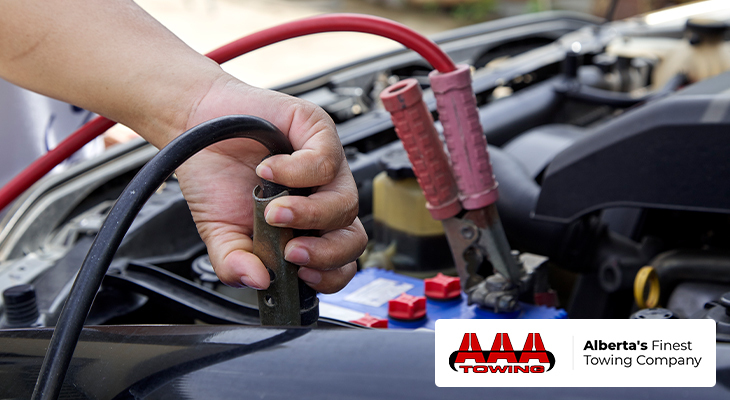
Calgary winters bring very low temperatures that increase demand for roadside services across the city. Many drivers experience dead batteries when temperatures drop, which leads to a sharp rise in calls for professional battery boosting services in Calgary during cold events.
During these city-wide cold periods, service requests are not handled on a first-come basis alone. Dispatch teams assess road conditions, vehicle type, location, and urgency before determining response order.
This process helps ensure that limited resources are used where they have the greatest operational and safety impact.
In Calgary, this prioritization supports traffic flow and reduces exposure risks during extreme winter conditions.
Understanding how battery boosting requests are handled helps fleets and drivers plan more effectively and set realistic expectations for response timing.
Why Cold Weather Increases Battery Failures
Cold air affects battery operation in measurable ways. A battery’s chemical reaction slows as the temperature falls, which reduces its ability to deliver power when starting a vehicle.
At typical winter temperatures below freezing, a battery can lose a significant portion of its effective capacity. This makes starting engines more difficult and raises the likelihood of battery failure.
One government car maintenance guide notes that batteries need to be fully charged to start reliably in cold weather. Motors need a fully charged battery to start in cold weather, during extreme conditions, which leads to more roadside calls during cold events.
With Calgary’s winter climate, freezing temperatures are common and can occur for extended periods. This pattern leads to clusters of battery failures in the same areas, creating spikes in requests for battery boosting and assistance.
Centralized Dispatch During Surge Periods
When cold sets in, Calgary’s centralized dispatch system receives high call volumes for battery boosts, jump starts, and other assistance. A key function of dispatch is sorting requests based on urgency and safety impact rather than just arrival time.
Dispatchers collect details on the vehicle location, whether it is blocking traffic, and the type of vehicle involved. This intake triage step is essential before a response team is assigned.
First responders in towing and roadside services share available units across sectors of the city to balance resource distribution. This means a request from one part of the city may be scheduled later if another incident has higher traffic exposure or safety priority.
Vehicle Type and Operational Impact
Not all battery boosting requests are equal from an operational standpoint. When dispatchers review incoming calls, they check the type of vehicle involved.
Commercial vehicles, delivery trucks, and service fleets often have higher priority when their failure affects business operations or blocks a roadway. A vehicle stranded in a busy intersection or on a main artery can pose a hazard and disrupt traffic flow.
For example, a delivery truck stuck in a lane near downtown during the morning rush requires quicker attention than a private vehicle parked on a quiet residential street. This prioritization helps reduce broader disruption on Calgary’s major routes.
Safety and Traffic Exposure
A major factor that influences how a request is prioritized is the level of safety risk and traffic exposure.
Vehicles that are stranded in active travel lanes, on highway ramps, or at major intersections create potential hazards for other drivers. Dispatch systems flag these situations quickly and adjust response plans accordingly.
When a vehicle blocks a lane, emergency units might be sent sooner because the risk of secondary incidents increases.
Dispatch teams use mapping tools and real-time traffic data to identify these high-impact calls and assign units based on current resource availability and the potential for traffic delays.
Access Constraints and Clearance Challenges
In some Calgary locations, physical access to the stranded vehicle affects prioritization. Vehicles in underground parkades, narrow alleys, or tight parking areas require crews with special equipment or flatbed trucks.
These scenarios take longer and involve different scheduling considerations. If the vehicle’s location is challenging, dispatch may assign the call to a unit that can handle both battery boosting and extraction efficiently.
This dual capability can reduce total response time even when initial arrival is slower due to distance. Prioritizing calls this way ensures that more complicated jobs do not consume resources meant for safer or easier tasks.
Weather Severity and Dispatch Decisions
The nature of the cold event itself can change how dispatchers assign resources. During sudden temperature drops early in the morning, many drivers leave work at the same time and then discover weak batteries.
These concurrent failures can create a temporary spike in requests that require immediate attention. Dispatchers must balance weather patterns with call volume. If the temperature remains extremely low for several days, the total number of pending requests can grow.
In these cases, dispatch may extend expected wait times for less urgent calls while prioritizing those that affect traffic systems or critical services.
For instance, requests from fleet vehicles that are part of emergency planning or high-frequency service routes may be placed ahead of others. This does not mean private calls are ignored.
It means the routing plan aligns with overall city movement and broad operational needs during peak pressure.
When Requests Exceed Available Units
There are times when the volume of battery boosting calls exceeds the number of available units. Calgary’s roadside and towing services manage this through queue management and regular updates to those waiting.
Dispatchers communicate estimated arrival times based on current traffic conditions, staffing, and weather severity. Requests are tracked and sequenced so that calls flagged as high risk remain near the top of the list.
Lower-risk calls may be delayed slightly until more units become available. This prioritization helps ensure that the most critical problems are addressed quickly and that resources are used efficiently during prolonged cold events.
Coordination With Other Towing and Roadside Needs
During Calgary’s coldest days, battery boosting requests often overlap with other roadside needs such as flat tires, fuel delivery, or towing for vehicles that cannot be restarted.
Dispatchers coordinate response teams to handle these mixed demands while maintaining safety protocols. Units may be reassigned mid shift to respond to higher priority calls.
This coordination requires real-time decision-making and communication with drivers who are waiting.
Clear communication helps set reasonable expectations for arrival times and reduces frustration for customers. Dispatchers work with crews to strike a balance between speed and safety.
Information That Helps Dispatch Prioritize
When contacting Calgary towing or roadside services for a battery boost, some details can help dispatchers assign the appropriate priority.
Drivers and fleet operators should be ready to provide clear location information and describe whether the vehicle is blocking traffic or parked safely off the road.
Commercial operators can also indicate whether the vehicle is part of a scheduled route or a critical service.
These details help dispatch make informed decisions about how to sequence calls. Clear, accurate information benefits both drivers and dispatch teams by reducing guesswork.
Why City-Wide Coverage Matters
Calgary’s city-wide coverage for towing and roadside assistance helps ensure service teams remain available across all areas of the city.
When cold events trigger a surge in battery failures, having multiple dispatch points helps reduce wait times in locations that might otherwise experience delays.
Winter conditions place added pressure on roads, drivers, and response systems across urban environments.
Transport Canada’s Winter Driving Safety Guidance highlights the need for extra caution during harsh winter conditions, which also affects how quickly assistance can move through the city.
A distributed coverage model allows dispatchers to assign the right equipment without unnecessary travel time. This approach helps crews arrive sooner and with the proper tools for battery boosting and related roadside tasks during Calgary cold events.
Conclusion
In Calgary, cold weather creates a predictable surge in battery boost requests. The prioritization process used by dispatch ensures responses are managed based on safety, traffic impact, vehicle type, and access constraints.
Drivers and fleet managers benefit from understanding how this process works, so expectations for response times remain realistic during peak cold events.
About Us
AAA Towing is a Calgary-based towing provider experienced in managing roadside support throughout winter conditions in the city. Our team provides structured towing and roadside services that align with city-wide operational needs and fleet requirements.
If you have questions about winter assistance planning or require service coverage that fits your business, our professionals are ready to help at every step.
Contact us to discuss your roadside assistance requirements and how we can support your fleet during cold weather conditions.
Fast & Reliable Towing
We make sure each customer is completely satisfied before we leave the job.