Why Traffic Control Matters During Heavy Vehicle Recoveries
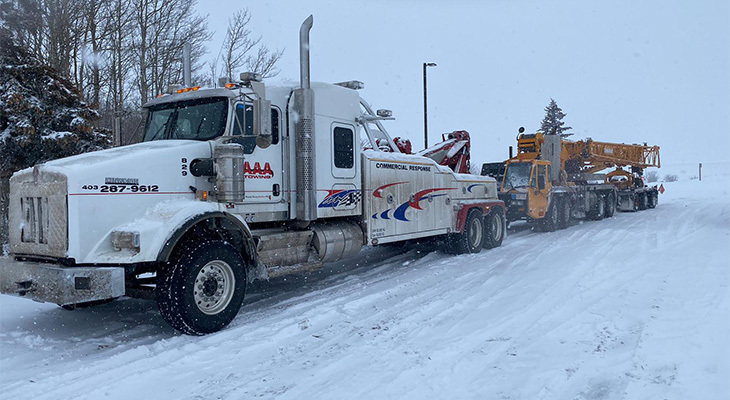
When a commercial truck or piece of equipment breaks down or is involved in an incident, recovery is rarely simple. These events often occur on active roadways, industrial corridors, or highway shoulders where traffic continues to move at speed. Without proper planning, a recovery scene can quickly become dangerous for operators, motorists, and nearby workers.
This is why traffic control is a critical component of professional towing services in Calgary and a defining factor in safe heavy vehicle recoveries.
For businesses that rely on towing in Calgary to support fleet operations, traffic control is not an optional add-on. It is a core safety requirement that protects people, limits liability, and ensures recoveries are completed efficiently without creating secondary incidents.
Traffic Control in Heavy Vehicle Recovery
Traffic control refers to the methods used to manage the movement of vehicles and pedestrians around a work zone. During a heavy recovery, this includes lane closures, signage, cones, barricades, and trained personnel directing traffic when required.
Heavy-duty towing and heavy equipment hauling often take place in unpredictable environments. Recovery locations may include narrow shoulders, bridge approaches, intersections, or construction zones.
Each setting presents different risks. Proper traffic control adapts to these conditions and creates a controlled space where recovery crews can operate safely.
In Calgary, traffic control expectations are shaped by provincial safety standards and municipal road use requirements. Commercial recovery providers are expected to understand how to set up compliant traffic accommodation that reflects roadway speed, traffic volume, and visibility.
Why Heavy Vehicle Recoveries Create Elevated Risk
Recovering a disabled tractor-trailer or large piece of machinery involves forces and movements that smaller roadside incidents do not. Winching, lifting, load shifting, and heavy equipment hauling all require space and stability. At the same time, passing vehicles may be travelling at highway speeds only metres away.
Without traffic control, several risks increase immediately:
Operators are exposed to live traffic while connecting equipment or managing loads. Motorists may not recognize a recovery scene in time to slow down or change lanes. Sudden stops or lane changes by drivers can trigger secondary collisions. Equipment movement can intrude into active lanes without warning.
These risks are not theoretical. Industry safety data consistently shows that roadside work zones are high-risk environments. This is why traffic control is treated as an essential safety system rather than a courtesy.
Protecting Recovery Operators and the Public
The first responsibility of traffic control during heavy-duty towing is protecting people. Recovery operators work on foot around large vehicles, cables, and hydraulic systems. Even a minor driver error can result in serious injury when vehicles pass too closely.
Traffic control measures create buffer zones that separate workers from traffic. Warning signs give drivers time to react. Tapered cone layouts guide vehicles smoothly around the scene rather than forcing abrupt manoeuvres. In some situations, trained traffic control personnel may be required to manage flow safely.
Controlling traffic around work areas is a key method of preventing struck by incidents involving workers and vehicles. Establishing a visible and predictable traffic pattern reduces confusion and helps drivers make safer decisions.
For companies relying on towing in Calgary, these measures demonstrate a commitment to safety that extends beyond the recovery crew to every road user passing the scene.
Reducing Secondary Collisions and Incident Escalation
One of the most overlooked dangers during heavy vehicle recovery is the risk of secondary collisions. These occur when drivers fail to notice an incident ahead and collide with stopped vehicles, tow trucks, or other motorists reacting suddenly.
Secondary collisions often cause more damage and injury than the original incident. They also increase road closures, insurance claims, and investigation complexity.
Effective traffic control reduces this risk by making the recovery scene visible well in advance. Warning signs placed at appropriate distances alert drivers early. Gradual lane closures prevent sudden braking. Clear guidance helps traffic move steadily rather than unpredictably.
For fleet managers and insurers, this risk reduction is significant. Proper traffic control shows that heavy-duty towing providers are actively managing exposure rather than reacting after an incident escalates.
Supporting Compliance With Alberta Traffic Standards
In Alberta, heavy vehicle recoveries are not informal roadside events. They are treated as temporary work zones because they interfere with the normal movement of traffic on highways, city roads, and industrial corridors.
The Government of Alberta shares requirements for managing traffic in construction zones on Alberta highways, which apply whenever work activities impact active roadways. Heavy-duty towing and recovery operations meet this condition when tow trucks, operators, and recovery equipment occupy lanes or shoulders.
The traffic accommodation in work zones manual provides information and minimum requirements to ensure traffic accommodation in work zones is handled in a consistent, safe and effective manner. These minimum requirements reinforce why traffic control planning is essential during heavy vehicle recoveries, particularly on high-speed or high-volume roads.
Professional towing services in Calgary integrate these principles into recovery planning to protect workers, manage traffic flow, and reduce the risk of secondary incidents during complex recovery operations.
Minimizing Delays and Restoring Traffic Flow Faster
Traffic control is not only about safety. It also plays a key role in efficiency. A poorly managed recovery scene can create unnecessary congestion that delays commuters, disrupts commercial routes, and increases frustration among motorists.
Clear traffic control helps traffic move smoothly around the recovery area. When drivers understand where to go, they are less likely to hesitate, stop unexpectedly, or ignore directions. This keeps queues shorter and reduces pressure on recovery crews.
For heavy equipment hauling and large vehicle recoveries, efficiency matters. Extended closures increase costs, strain resources, and attract attention from regulators and media. Well-executed traffic control helps complete recoveries faster and reopen lanes sooner.
Managing Complex Recovery Scenarios
Not all recoveries are the same. Some involve overturned vehicles, spilled loads, or damaged infrastructure. Others require multiple tow trucks, cranes, or support vehicles. In these situations, traffic control becomes even more important.
Complex scenes often change as the recovery progresses. Lanes may need to close or reopen in stages. Equipment positioning may shift. Traffic volumes may fluctuate depending on the time of day.
Experienced towing services in Calgary plan traffic control as a dynamic process. They monitor conditions continuously and adjust layouts as needed. This proactive approach keeps the scene safe even as recovery operations evolve.
Insurance and Liability Considerations
Traffic control decisions made during a recovery can have long-term consequences. If an incident occurs and traffic control is inadequate, liability exposure increases significantly. Investigations often examine whether reasonable steps were taken to protect workers and the public.
Using professional heavy-duty towing providers that integrate traffic control into their operations helps demonstrate due care. Documented traffic accommodation plans and trained personnel support defensible outcomes if claims arise.
For insurers and fleet operators, this discipline is a key indicator of risk management maturity.
The Role of Training and Experience
Traffic control during heavy vehicle recovery is not simply about placing cones. It requires understanding traffic behaviour, sight lines, stopping distances, and human reaction times. It also demands coordination between operators, dispatch, and sometimes law enforcement or road authorities.
Experienced heavy-duty towing teams receive training on traffic accommodation principles and apply them consistently. They recognize when additional resources are needed and do not hesitate to escalate controls to match risk.
This level of professionalism separates reliable providers from improvised solutions that may cut corners under pressure.
About Us
At AAA Towing, we focus on one thing, and we do it well. Supporting commercial operations through professional heavy-duty towing and recovery across Calgary. Our team works with fleet managers, logistics providers, construction companies, and insurers who need dependable support when large vehicles or equipment are involved.
Every recovery is approached with planning, precision, and safety in mind. From traffic control coordination to heavy equipment hauling and complex recoveries, our operators understand the risks that come with working in live traffic environments.
We use proven procedures, purpose-built equipment, and experienced decision-making to reduce disruption and help restore normal operations as efficiently as possible.
We know that when a recovery is required, time, safety, and accountability matter. That is why businesses across Calgary rely on us as a trusted recovery partner rather than a last-minute solution.
If your operation needs reliable heavy-duty towing or recovery support in Calgary, contact us today to discuss your recovery needs and dispatch requirements.